Ductwork Replacement Cost in 2026: Prices by House Size
Ductwork replacement costs $3,500 on national average, with most projects landing between $1,400 and $5,600. Installed prices run $25 to $55 per linear foot: flexible duct is cheapest at $10 to $25 per foot installed, while sheet metal runs $25 to $60 per foot. See 2026 prices by house size, duct type, and location.
Planning figures, not contractor quotes. How we calculate
Short answer
Replacing ductwork costs about $3,500 on national average, with most projects landing between $1,400 and $5,600. Prices run $25 to $55 per linear foot: flexible duct is cheapest at $10 to $25 per foot installed, while sheet metal runs $25 to $60 per foot. Cost by house size: 1,000-1,500 sq ft homes average $1,400 to $3,400 and 2,000-2,500 sq ft homes $2,800 to $5,600. Basement work is cheapest ($1,800-$3,100); crawl spaces cost most ($3,000-$7,300).
Cost summary
Estimates per project. See the cited sources and methodology before using these figures for a decision.
| Cost level | Estimate |
|---|---|
| Low | $1,400.00 |
| Typical | $3,500.00 |
| High | $8,000.00 |
Calculate your planning range
Enter rates from your own quotes or research. We do not supply unverified local prices.
What you will actually pay
Replacing ductwork costs about $3,500 on national average, with most professional projects landing between $1,400 and $5,600. That average comes from 399 contractor-reported residential projects, so it reflects real invoices rather than estimates. Simple replacements in easy-to-reach spaces can run under $1,400, while large or difficult homes push toward $8,000 or beyond.
A second independent 2026 review puts many professional projects between $2,000 and $7,500 with an average near $4,000, and notes that large or complex projects can reach $12,000 or more. The takeaway for budgeting: plan on the national average of about $3,500, then adjust up if your home is large, the ducts are hard to reach, or you are choosing premium materials.
Sources: HomeGuide: How Much Does It Cost to Install or Replace Ductwork? (HomeGuide, 2026), NorthAir Savings: New Ductwork When Replacing HVAC? 2026 Cost Guide (NorthAir Savings)
Cost by duct type: flexible vs sheet metal
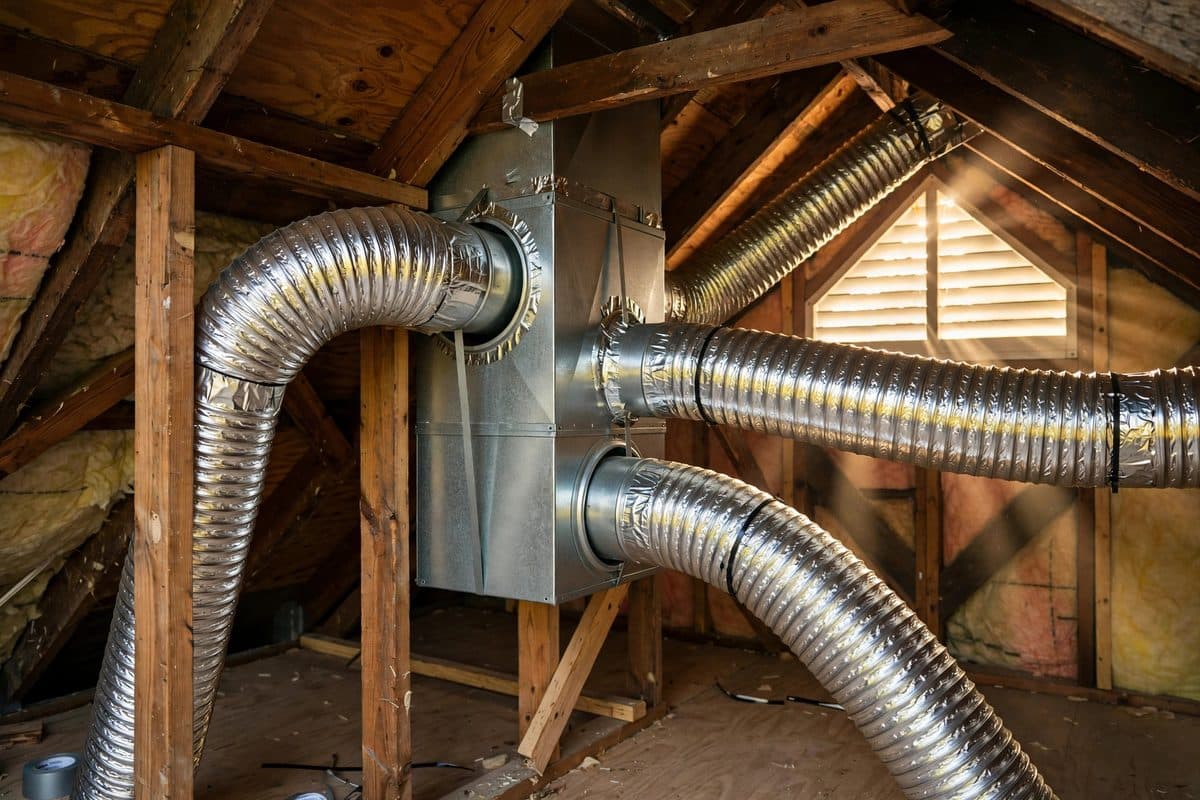
Flexible duct is the budget choice and the most common material in residential replacements. Installed flexible duct runs $10 to $25 per linear foot, while the material alone costs about $1 to $4 per foot depending on insulation. It installs fast in tight spaces but has the shortest lifespan and is more vulnerable to tears, pests, and moisture.
Sheet metal is the durable option. Installed sheet metal duct runs $25 to $60 per linear foot, with material at $7 to $13 per foot, and it can last 25 years or more with proper care. Fiberglass duct board sits in the middle at $12 to $40 per linear foot installed, good for long straight runs and sound control. For a whole home, material choice alone can move the project by thousands, so get quotes itemized by duct type before you compare contractors.
Sources: HVAC Calculator Hub: Ductwork Cost Per Foot: 2026 Price Breakdown (HVAC Calculator Hub), HomeGuide: How Much Does It Cost to Install or Replace Ductwork? (HomeGuide, 2026)
Cost by house size and duct location
Cost tracks house size closely. For replacements, a 1,000 to 1,500 sq ft home averages $1,400 to $3,400; a 1,500 to 2,000 sq ft home $2,100 to $4,500; and a 2,000 to 2,500 sq ft home $2,800 to $5,600. Most replacements are priced at $25 to $55 per linear foot, with the average home having around 100 linear feet of ductwork.
Location matters almost as much. Basement ductwork is the cheapest to replace at $1,800 to $3,100 because it is easy to reach, while crawl space work runs $3,000 to $7,300 with an average near $4,800 thanks to tight, difficult working conditions. Attic replacements fall between at $2,200 to $5,600. If your quote is far above these bands, ask whether access conditions or extra remediation are driving it.
Sources: HomeGuide: How Much Does It Cost to Install or Replace Ductwork? (HomeGuide, 2026), Angi: How Much Does It Cost to Replace Ductwork in a Crawl Space? [2026 Data] (Angi)
New install, replacement, or repair
Replacing existing ducts is cheaper than installing a brand new system. A new ductwork installation in a home without ducts runs $2,400 to $6,600 on average, at $40 to $65 per linear foot, versus $25 to $55 per foot for replacement. Retrofitting a finished home sits at the top of that band at $3,500 to $6,000 because the crew must work around existing walls and ceilings.
If only part of the system is damaged, a partial replacement costs $1,000 to $3,000, and minor repairs like fixing a leak or replacing a small section run $200 to $700. Sealing leaks without replacing ducts is another option: manual sealing costs $400 to $1,900 and aerosol sealing $1,300 to $2,700. When a new furnace or air conditioner is going in anyway, ducts only need replacement if inspection shows they are damaged, poorly sized, leaking badly, or wrong for the new equipment. If the ducts only need attention rather than replacement, our air duct cleaning cost guide prices that cheaper fix.
Sources: HomeGuide: How Much Does It Cost to Install or Replace Ductwork? (HomeGuide, 2026), HVAC Pricing Guide: Ductwork Cost in 2026: Repair and Installation (HVAC Pricing Guide), NorthAir Savings: New Ductwork When Replacing HVAC? 2026 Cost Guide (NorthAir Savings)
Payback, energy savings, and ways to save
Replacing leaky ducts can cut heating and cooling bills by 10 to 40 percent, and one estimator model puts annual savings at 20 to 30 percent with a 5 to 7 year payback on the replacement cost. Given that the job typically takes just 1 to 2 days and ducts last 10 to 20 years, the math is favorable when the existing system is leaky or undersized.
To keep the bill down, keep the existing layout where possible, since rerouting adds $25 to $55 per linear foot. Flexible insulated duct is the cheapest full material choice at $10 to $25 per foot installed. Finally, since duct quotes vary widely, three written quotes from licensed HVAC contractors is the single most reliable way to pay the market price rather than the first price you hear. Bundling new ducts with a new AC saves on labor; our central AC installation cost guide covers the combined project.
Sources: HomeGuide: How Much Does It Cost to Install or Replace Ductwork? (HomeGuide, 2026), CDCalculators: Ductwork Replacement Cost Calculator 2026 (CDCalculators), HVAC Calculator Hub: Ductwork Cost Per Foot: 2026 Price Breakdown (HVAC Calculator Hub)
Sources
- HomeGuide: How Much Does It Cost to Install or Replace Ductwork? (HomeGuide, 2026) (accessed 2026-10-12)
- CDCalculators: Ductwork Replacement Cost Calculator 2026 (CDCalculators) (accessed 2026-10-12)
- HVAC Calculator Hub: Ductwork Cost Per Foot: 2026 Price Breakdown (HVAC Calculator Hub) (accessed 2026-10-12)
- Angi: How Much Does It Cost to Replace Ductwork in a Crawl Space? [2026 Data] (Angi) (accessed 2026-10-12)
- NorthAir Savings: New Ductwork When Replacing HVAC? 2026 Cost Guide (NorthAir Savings) (accessed 2026-10-12)
- HVAC Pricing Guide: Ductwork Cost in 2026: Repair and Installation (HVAC Pricing Guide) (accessed 2026-10-12)
Frequently asked questions
How much does an HVAC project cost?
Replacing ductwork costs about $3,500 on national average, with most projects landing between $1,400 and $5,600. Prices run $25 to $55 per linear foot: flexible duct is cheapest at $10 to $25 per foot installed, while sheet metal runs $25 to $60 per foot. Cost by house size: 1,000-1,500 sq ft homes average $1,400 to $3,400 and 2,000-2,500 sq ft homes $2,800 to $5,600. Basement work is cheapest ($1,800-$3,100); crawl spaces cost most ($3,000-$7,300).
Why is there a cost range instead of a single price?
Project costs move with scope, finish level, and local labor rates. This guide splits the national planning range into low, typical, and high levels, and the scope sections explain what pushes a project toward each end. Use the range to budget, then collect itemized contractor quotes for your exact project.
Are these figures contractor quotes?
No. They are national planning ranges compiled from published, cited sources, shown with their assumptions and limitations. Treat them as a budgeting starting point, not a bid. Our methodology page explains how every figure is sourced and reviewed.