Furnace vs Heat Pump Cost in 2026: Which Is Cheaper?
A whole-home heating replacement costs $8,000 on national average, typically $3,500 to $13,000 installed. A gas furnace runs $4,000 to $10,000 but needs a separate air conditioner; a heat pump at $5,500 to $12,000 heats and cools in one system.
Planning figures, not contractor quotes. How we calculate
Short answer
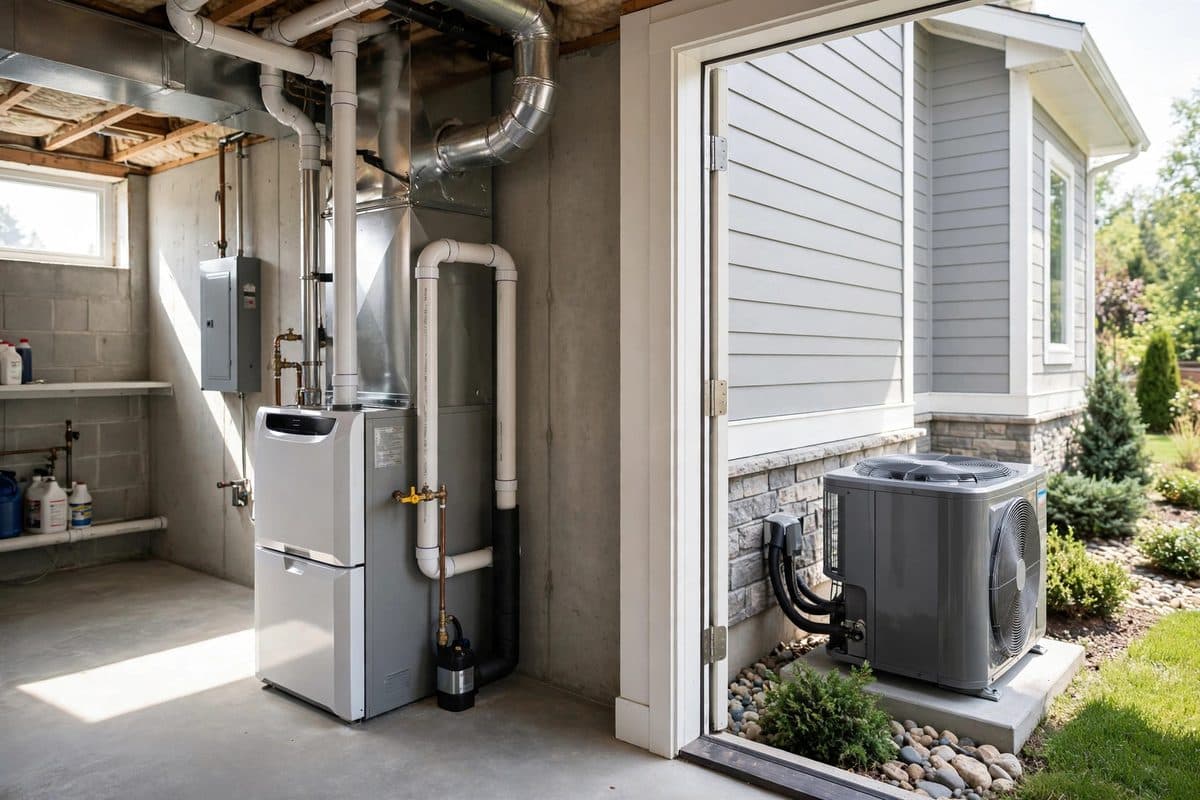
A whole-home heating replacement costs $8,000 on national average, typically $3,500 to $13,000 installed. A gas furnace runs $4,000 to $10,000 but needs a separate $5,000+ air conditioner, while a heat pump at $5,500 to $12,000 heats and cools in one system. Note: the $2,000 federal heat-pump tax credit expired Dec 31, 2025; many 2026 pages still list it.
Cost summary
Estimates per project. See the cited sources and methodology before using these figures for a decision.
| Cost level | Estimate |
|---|---|
| Low | $3,500.00 |
| Typical | $8,000.00 |
| High | $13,000.00 |
Calculate your planning range
Enter rates from your own quotes or research. We do not supply unverified local prices.
What you will actually pay
Replacing your whole-home heating system costs $8,000 on national average, with most projects landing between $3,500 and $13,000 for the unit plus professional installation. The bottom of that band is a standard gas furnace; the top is a cold-climate heat pump or hybrid system. ACDirect's 2026 data puts furnaces at $4,000 to $10,000 installed and heat pumps at $5,500 to $12,000 installed, both centering near $8,000 for a typical 2,000 square foot home.
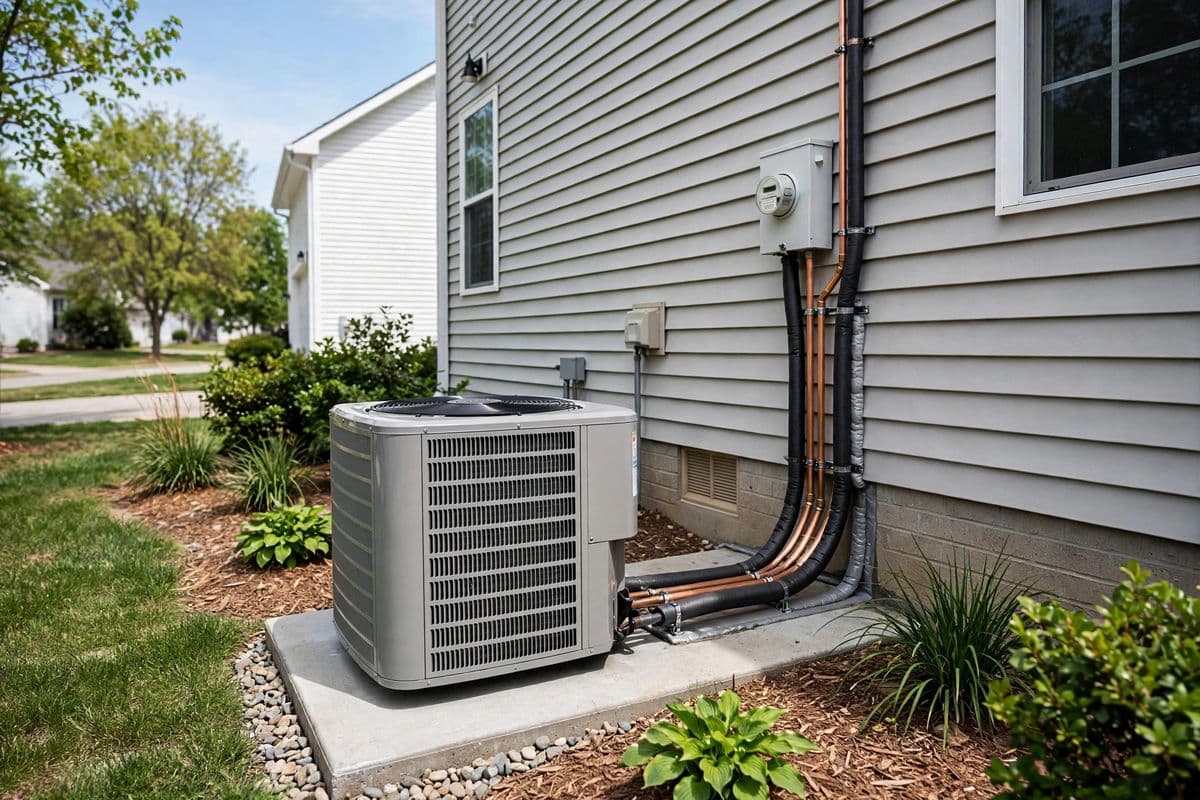
The number most quotes hide is the cooling half. A furnace only heats, so a fair comparison is furnace plus central AC at $8,000 to $14,000 installed against a heat pump at $5,000 to $12,000 that does both jobs in one box. Once cooling is in the math, the upfront gap that looks like $5,000 shrinks to about $1,500, and in mild climates the heat pump often wins outright.
Sources: ACDirect: Heat Pump vs Gas Furnace Cost: 2026 Comparison (ACDirect), The Cooling Company: Heat Pump vs Gas Furnace: 2026 Cost Guide, Las Vegas (The Cooling Company), MiniHomeHub: Heat Pump vs Gas Furnace: 2026 Costs and Savings (MiniHomeHub)
Upfront cost by system type
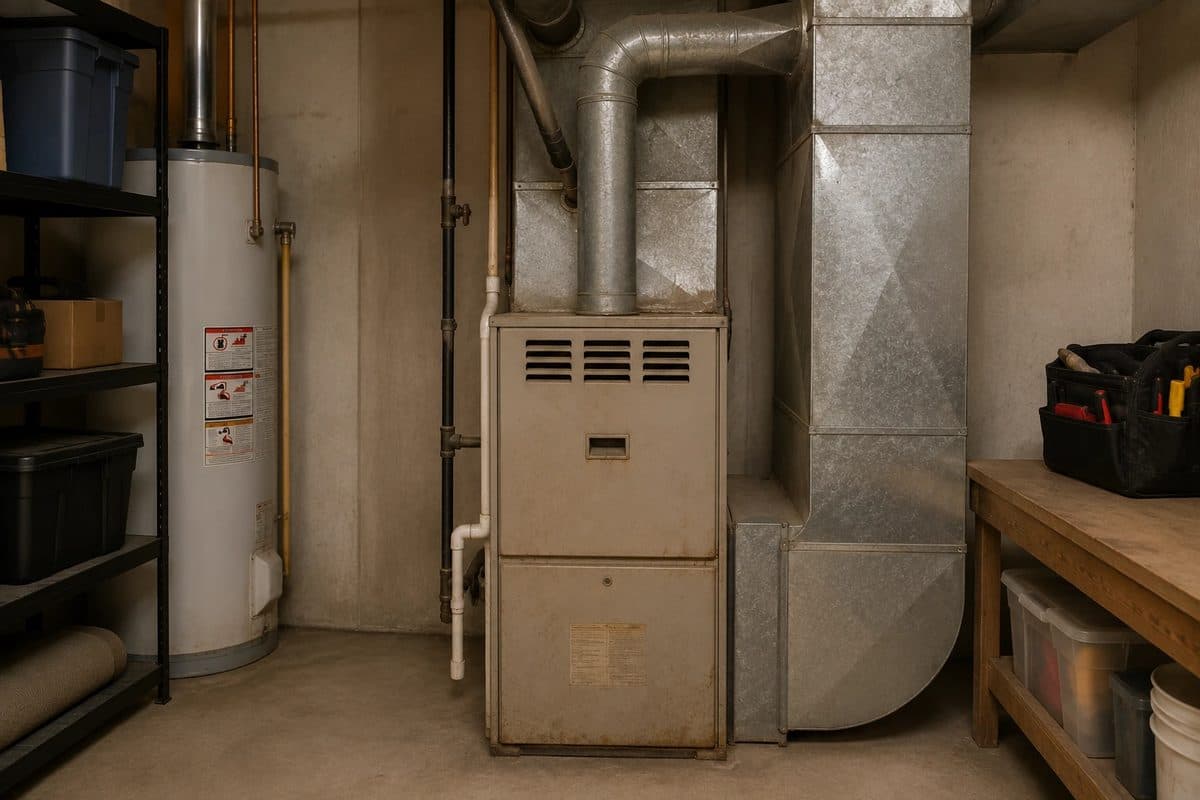
Gas furnaces split cleanly by efficiency. An 80% AFUE unit runs $2,700 to $4,500 installed, while a 95% AFUE high-efficiency furnace runs $4,000 to $6,500 installed. The high-efficiency unit costs more upfront and burns less gas every winter, which is the trade the operating-costs section prices out.
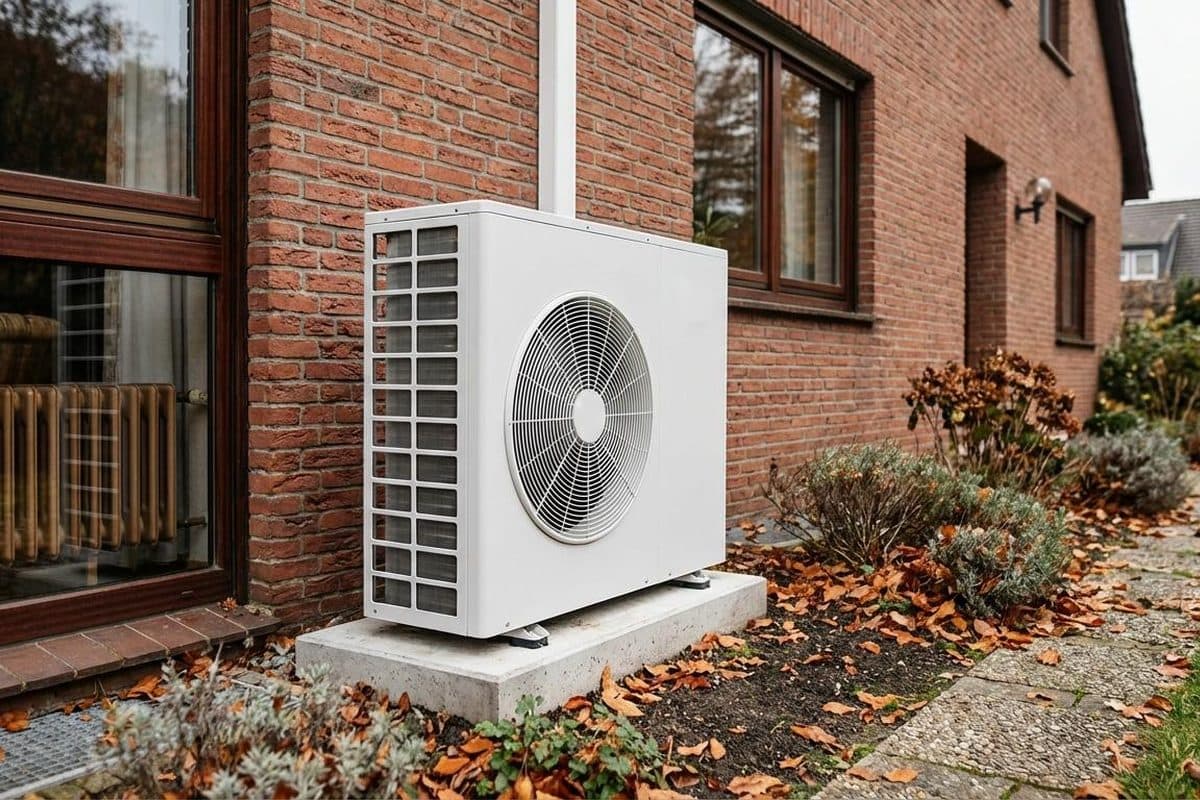
Heat pumps split by climate capability. A standard ducted air-source heat pump runs $6,500 to $11,000 installed; a cold-climate model built to hold output below zero runs $8,000 to $13,000; a hybrid dual-fuel system pairing a heat pump with a gas furnace backup runs $9,500 to $15,000. MiniHomeHub breaks these into equipment plus installation: a ducted heat pump is $3,500 to $6,000 in equipment with $3,000 to $5,000 in installation labor, which is why two quotes for the same house can differ by thousands.
Sources: MiniHomeHub: Heat Pump vs Gas Furnace: 2026 Costs and Savings (MiniHomeHub), ACDirect: Heat Pump vs Gas Furnace Cost: 2026 Comparison (ACDirect), The Cooling Company: Heat Pump vs Gas Furnace: 2026 Cost Guide, Las Vegas (The Cooling Company)
What each costs to run every year
Heat pumps win the annual bill in most of the country. ACDirect puts national-average annual heating at $700 to $1,100 for a high-efficiency heat pump versus $1,000 to $1,400 for a 96% AFUE furnace, and J Martin's 2026 Orange County numbers show $250 to $550 versus $500 to $900 for a 2,000 square foot home, with $300 to $800 in full-year heating plus cooling savings.
The physics behind the gap is the COP crossover. Boer Brothers' 2026 North Carolina analysis prices a therm of delivered heat at $1.46 for a heat pump running at COP 3.0, versus $1.82 for a new 95% furnace and $2.16 for a 20-year-old 80% furnace. The crossover sits near COP 2.4: above it the heat pump is cheaper per unit of heat, below it gas wins. In mild winters the heat pump spends most hours above 3.0; on the coldest nights a dual-fuel system hands off to the furnace. Where you live and what your utility charges decide the winner more than the equipment sticker does.
Sources: ACDirect: Heat Pump vs Gas Furnace Cost: 2026 Comparison (ACDirect), J Martin Indoor Air Quality: Heat Pump vs Gas Furnace Cost: 2026 Orange County Guide (J Martin IAQ), Boer Brothers HVAC: Gas Furnace to Heat Pump: 2026 Cost per Therm, NC (Boer Brothers HVAC)
The 10-year ownership math
Installation is only the first check. NorthAir Savings published a transparent 10-year comparison in September 2026, technically reviewed by an HVAC/R technician: about $23,500 total for a heat pump versus about $21,420 for a 95% gas furnace plus central AC, before rebates, with identical cooling costs excluded from both sides. Under those specific assumptions gas wins by roughly $2,080, and the author is explicit that changing the local rates, the equipment, or the incentives reverses the result.
Lifespan and maintenance tilt the other way over longer holds. Furnaces typically last 18 to 25 years against 15 to 20 for a heat pump, but the furnace needs a separate air conditioner that lasts only 12 to 15 years, so you buy cooling twice in one furnace lifetime. Annual maintenance runs $80 to $150 for a furnace against $150 to $250 for a heat pump, which needs two tune-ups a year. Households that drop gas service entirely also shed $240 to $480 a year in fixed gas charges, a saving most comparisons leave out.
Sources: NorthAir Savings: Heat Pump vs Gas Furnace: True 10-Year Cost in 2026 (NorthAir Savings), The Cooling Company: Heat Pump vs Gas Furnace: 2026 Cost Guide, Las Vegas (The Cooling Company), J Martin Indoor Air Quality: Heat Pump vs Gas Furnace Cost: 2026 Orange County Guide (J Martin IAQ)
Tax credits and rebates in 2026: read this before you trust page 1
Here is where most ranking pages are wrong. The federal 25C energy-efficient home improvement credit, worth up to $2,000 for qualifying heat pumps, expired on December 31, 2025. Several 2026-dated pages still present it as available, including one updated within the last week that claims it runs through 2032. Do not subtract $2,000 from any quote based on those pages.
What remains real is state and utility money, and it varies wildly. Some utilities still offer $250 to $550 for qualifying heat pumps, and some states run their own rebate programs with income-based tiers. Check DSIRE (the Database of State Incentives for Renewables and Efficiency) and your utility's current rebate page before you sign, and get the rebate terms in writing with the quote. A heat pump quote that assumes an expired federal credit is a quote built on $2,000 of air.
Sources: The Cooling Company: Heat Pump vs Gas Furnace: 2026 Cost Guide, Las Vegas (The Cooling Company), ACDirect: Heat Pump vs Gas Furnace Cost: 2026 Comparison (ACDirect), MiniHomeHub: Heat Pump vs Gas Furnace: 2026 Costs and Savings (MiniHomeHub)
Worked example and when each wins
Take a 2,000 square foot home in a moderate climate with $0.15 per kWh electricity and no gas line. A ducted heat pump at $8,500 installed heats and cools the house, costs roughly $900 a year to run, and needs no gas meter at all. The furnace alternative is a 95% unit at $5,250 plus a central AC at $5,000, or $10,250 installed, with combined annual energy near $1,900. The heat pump costs less upfront here and about $1,000 less per year to run, which is why mild-climate, no-gas homes are the heat pump's best case. Our heat pump installation cost guide covers system-by-system pricing in detail.
The furnace wins in three situations: cheap natural gas with expensive electricity, very cold climates where the heat pump leans on costly backup heat, and homes that already have a gas line and ductwork in good shape. The heat pump wins where winters are moderate, where cooling is needed anyway, where there is no gas service, or where the homeowner wants one system instead of two. Limits of these numbers: they assume professional installation on existing ductwork, exclude electrical panel upgrades and ductwork replacement, and every figure moves with local labor rates, so collect three written quotes before deciding. Our furnace installation cost guide breaks down furnace pricing by type and size.
Sources: ACDirect: Heat Pump vs Gas Furnace Cost: 2026 Comparison (ACDirect), The Cooling Company: Heat Pump vs Gas Furnace: 2026 Cost Guide, Las Vegas (The Cooling Company), MiniHomeHub: Heat Pump vs Gas Furnace: 2026 Costs and Savings (MiniHomeHub), Boer Brothers HVAC: Gas Furnace to Heat Pump: 2026 Cost per Therm, NC (Boer Brothers HVAC), NorthAir Savings: Heat Pump vs Gas Furnace: True 10-Year Cost in 2026 (NorthAir Savings)
Sources
- MiniHomeHub: Heat Pump vs Gas Furnace: 2026 Costs and Savings (MiniHomeHub) (accessed 2026-10-12)
- Boer Brothers HVAC: Gas Furnace to Heat Pump: 2026 Cost per Therm, NC (Boer Brothers HVAC) (accessed 2026-10-12)
- ACDirect: Heat Pump vs Gas Furnace Cost: 2026 Comparison (ACDirect) (accessed 2026-10-12)
- The Cooling Company: Heat Pump vs Gas Furnace: 2026 Cost Guide, Las Vegas (The Cooling Company) (accessed 2026-10-12)
- NorthAir Savings: Heat Pump vs Gas Furnace: True 10-Year Cost in 2026 (NorthAir Savings) (accessed 2026-10-12)
- J Martin Indoor Air Quality: Heat Pump vs Gas Furnace Cost: 2026 Orange County Guide (J Martin IAQ) (accessed 2026-10-12)
Frequently asked questions
How much does an HVAC project cost?
A whole-home heating replacement costs $8,000 on national average, typically $3,500 to $13,000 installed. A gas furnace runs $4,000 to $10,000 but needs a separate $5,000+ air conditioner, while a heat pump at $5,500 to $12,000 heats and cools in one system. Note: the $2,000 federal heat-pump tax credit expired Dec 31, 2025; many 2026 pages still list it.
Why is there a cost range instead of a single price?
Project costs move with scope, finish level, and local labor rates. This guide splits the national planning range into low, typical, and high levels, and the scope sections explain what pushes a project toward each end. Use the range to budget, then collect itemized contractor quotes for your exact project.
Are these figures contractor quotes?
No. They are national planning ranges compiled from published, cited sources, shown with their assumptions and limitations. Treat them as a budgeting starting point, not a bid. Our methodology page explains how every figure is sourced and reviewed.