How Much Does It Cost to Replace a Sewer Line in 2026?
Sewer line replacement costs $5,000 on national typical in 2026, with most full lateral replacements landing between $3,300 and $8,000 and the full project band running $1,500 to $15,000. Trenchless CIPP lining runs $4,000 to $12,000 and pipe bursting $4,000 to $15,000, while open-trench digging costs $3,000 to $20,000 before surface restoration that often doubles the final bill.
Planning figures, not contractor quotes. How we calculate
Short answer
Replacing a residential sewer line costs $1,500 to $15,000 in 2026, with most full lateral replacements landing between $3,300 and $8,000. The method matters more than the material: trenchless CIPP lining runs $4,000 to $12,000, pipe bursting $4,000 to $15,000, and open-trench digging $3,000 to $20,000, all before surface restoration that contractors warn often doubles the final bill.
Cost summary
Estimates per project. See the cited sources and methodology before using these figures for a decision.
| Cost level | Estimate |
|---|---|
| Low | $1,500.00 |
| Typical | $5,000.00 |
| High | $15,000.00 |
Calculate your planning range
Enter rates from your own quotes or research. We do not supply unverified local prices.
What you will actually pay
Replacing a residential sewer lateral costs $1,500 to $15,000 in 2026, with $5,000 as a working national typical for a full replacement. Most homeowners land between $3,300 and $8,000: HomeAdvisor's project survey puts the average at $3,319, the Plumbing Price Guide's 2026 national average is $8,000 for a 50 to 80 foot lateral, and Western Rooter reports most jobs in its market landing between $5,000 and $10,000.
Treat the low headline numbers with skepticism. Aggregator ranges that start near $1,400 blend cheap spot repairs with full replacements, which is why the same pages then quote $50 to $250 per linear foot, a rate that implies $5,000 or more for a typical 40 to 60 foot run. Budget from the per-foot math for your line length, not from the blended average, and confirm whether the quote includes surface restoration before you compare bids.
Sources: Plumbing Price Guide: Sewer Line Replacement Cost 2026: Prices by Method and Length (Plumbing Price Guide), HomeAdvisor: Sewer Line Replacement Cost (HomeAdvisor), Western Rooter: Sewer Line Replacement Cost Estimate 2026 (Western Rooter)
What the camera finds decides the method
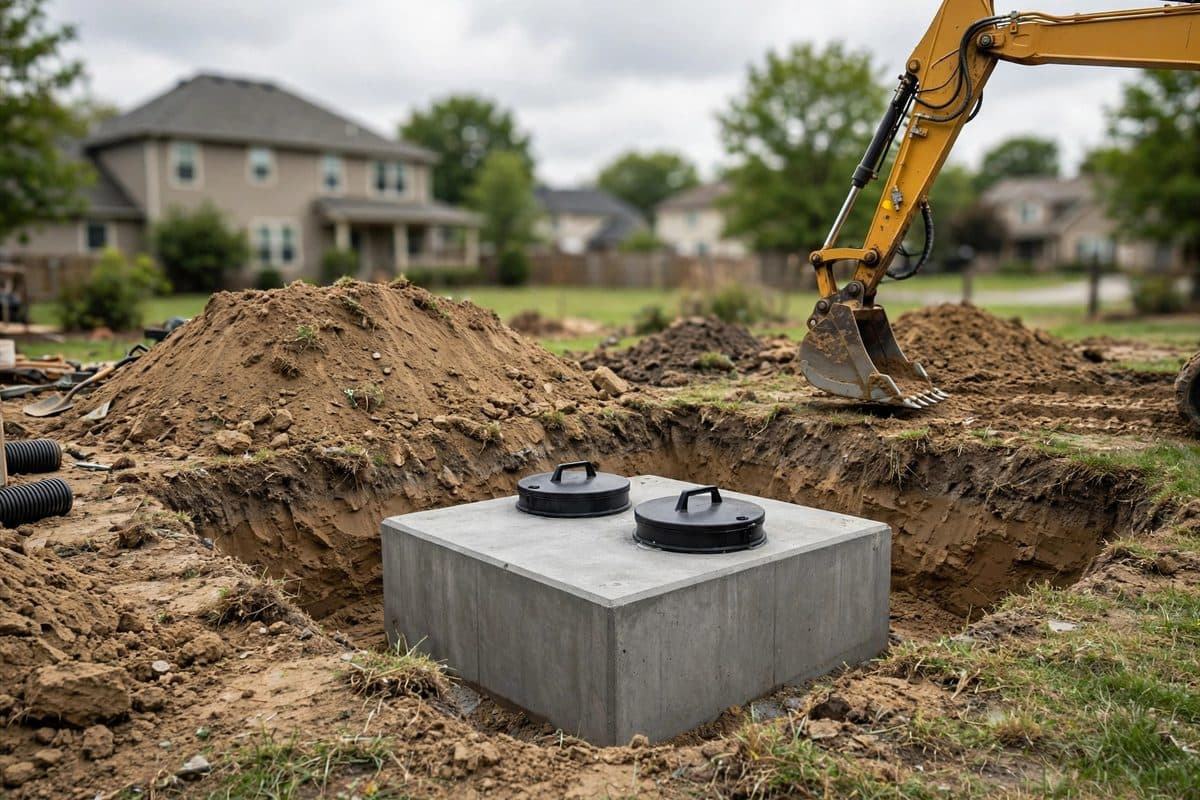
Every honest sewer job starts with a camera inspection, $150 to $500, because the pipe's condition dictates which methods are even possible. The decision table is straightforward: a single crack in an otherwise sound line gets a spot repair ($1,000 to $5,500); heavy grease or scale gets hydro jetting first ($300 to $900); an aged but intact line with joint cracks, root intrusion, or minor offsets qualifies for CIPP lining; a collapsed, bellied, or Orangeburg line needs pipe bursting or open-trench replacement. Homes that are not on city sewer budget a different system; our septic tank installation cost guide covers that project.
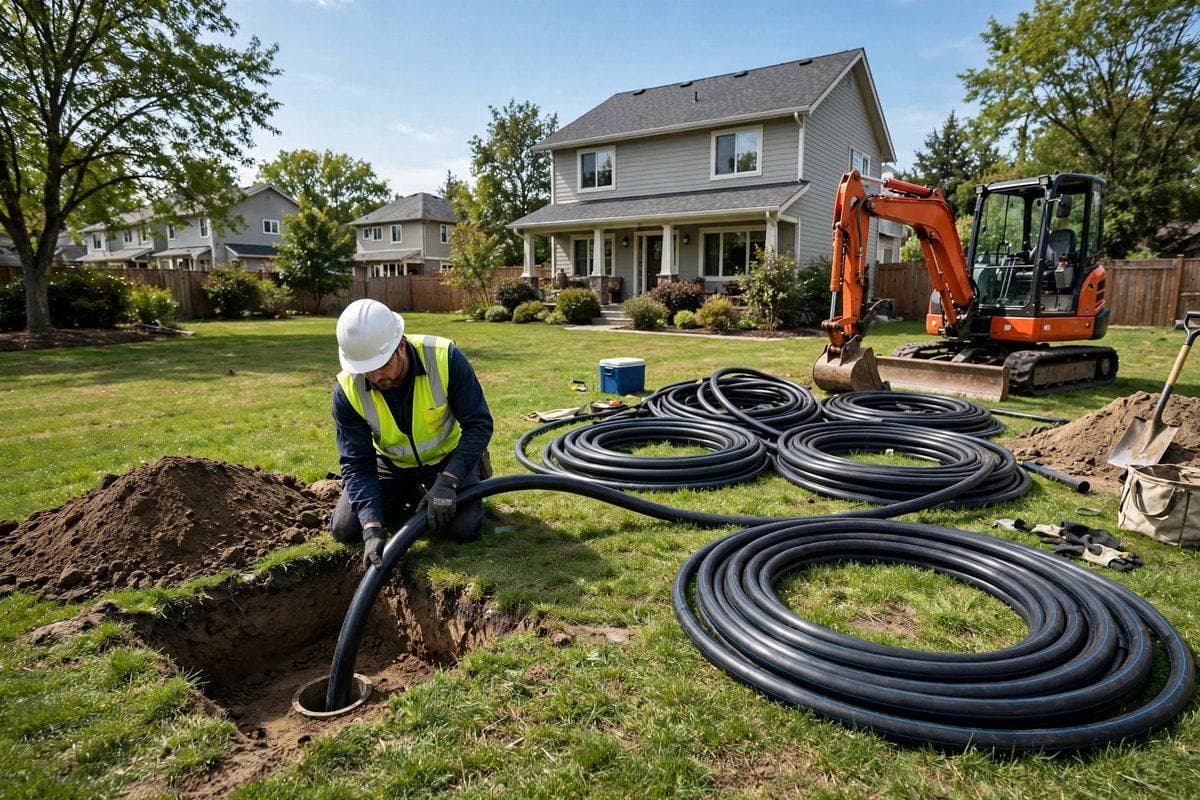
CIPP lining cannot fix a fully collapsed pipe or navigate bends sharper than about 45 degrees, and it reduces the pipe diameter by roughly a quarter inch. Pipe bursting fractures the old pipe while towing new HDPE through, so it handles collapsed and Orangeburg pipe and can even upsize the diameter. Open-trench digging remains mandatory when the line needs regrading for proper slope or makes multiple direction changes.
Sources: Plumbing Price Guide: Sewer Line Replacement Cost 2026: Prices by Method and Length (Plumbing Price Guide), Wooley Trenchless: Sewer Line Repair Cost Guide (Wooley Trenchless), HomeAdvisor: Sewer Line Replacement Cost (HomeAdvisor)
Cost by line length and method
Line length is the biggest cost lever because most methods price per linear foot. The Plumbing Price Guide's 2026 length-by-method matrix: a 30 foot run costs $2,500 to $7,500 open-trench, $3,200 to $6,500 bursting, or $3,000 to $5,500 CIPP; a 50 foot run costs $4,000 to $12,000 / $4,500 to $10,000 / $4,500 to $8,500; a 75 foot run costs $6,000 to $17,500 / $6,500 to $14,000 / $6,500 to $11,500; and a 100 foot run costs $8,000 to $22,500 / $8,500 to $18,000 / $8,500 to $14,500. Typical residential laterals cluster at 40 to 60 feet.
Depth and soil move these numbers. Each foot of depth past four feet adds roughly 15 to 25 percent to open-trench labor because OSHA requires shoring past five feet, and expansive clay or rocky soil adds 15 to 35 percent excavation time. Frost-line states bury lines deeper by default, which is one reason northern quotes run higher for the same linear footage.
Sources: Plumbing Price Guide: Sewer Line Replacement Cost 2026: Prices by Method and Length (Plumbing Price Guide), Plumbing Pro San Diego: Trenchless Sewer Repair Cost San Diego 2026 (Plumbing Pro San Diego)
Trenchless vs open trench: the honest math
Here is the contrarian truth contractors will confirm: trenchless is not cheaper per foot. Trenchless methods run $60 to $300 per linear foot against $50 to $250 for open-trench digging. Trenchless wins on the total bill only when surface restoration, the driveway, patio, and landscaping you would otherwise destroy, exceeds about $2,500. On a shallow line under plain lawn, digging is simply cheaper.
Method totals for 2026: CIPP lining $4,000 to $12,000, one to two days on site, with a 50-year expected life; pipe bursting $4,000 to $15,000, one to two days, 50 to 100 year life for the new HDPE. Open-trench replacement runs $3,000 to $20,000 and takes three to five days, with the excavation itself a fraction of the cost. Get both options priced side by side whenever the camera shows trenchless is viable.
Sources: Plumbing Price Guide: Sewer Line Replacement Cost 2026: Prices by Method and Length (Plumbing Price Guide), Wooley Trenchless: Sewer Line Repair Cost Guide (Wooley Trenchless), Plumbing Pro San Diego: Trenchless Sewer Repair Cost San Diego 2026 (Plumbing Pro San Diego), Western Rooter: Sewer Line Replacement Cost Estimate 2026 (Western Rooter)
Surface restoration: the line item quotes hide
The most expensive surprise in sewer work is not the pipe, it is putting your yard back together. Wooley Trenchless warns that restoration costs often double the final bill, and most plumber quotes exclude it entirely. Published restoration rates: turf $4 to $8 per square foot, stamped concrete or pavers $15 to $30, driveway replacement $6 to $12, and general landscaping $4.50 to $12 per square foot per HomeAdvisor.
Permits and fees are the second hidden layer. Expect $100 to $500 for permits, $150 to $600 for right-of-way permits where the line crosses the sidewalk or street, and municipal sewer tap fees of $500 to $5,000 in cities like Los Angeles, San Francisco, Seattle, and Portland. If your lateral lacks a two-way cleanout at the property line, code requires adding one on replacement, $400 to $1,200. Insist on line-item quotes that separate pipe work, restoration, and fees.
Sources: Wooley Trenchless: Sewer Line Repair Cost Guide (Wooley Trenchless), Plumbing Price Guide: Sewer Line Replacement Cost 2026: Prices by Method and Length (Plumbing Price Guide), HomeAdvisor: Sewer Line Replacement Cost (HomeAdvisor), Plumbing Pro San Diego: Trenchless Sewer Repair Cost San Diego 2026 (Plumbing Pro San Diego)
What moves your quote, and what waiting costs
Beyond length, depth, and soil, five factors swing quotes: the pipe material being replaced (clay joints invite roots, cast iron corrodes, Orangeburg collapses and forces full replacement, though the new pipe itself is under 5 percent of project cost), a failed tap at the city main (adds $1,500 to $5,000), access constraints (lines under a slab add $300 to $350 per foot and can force open-cut), local labor rates, and season (frozen or saturated ground slows winter and spring work).
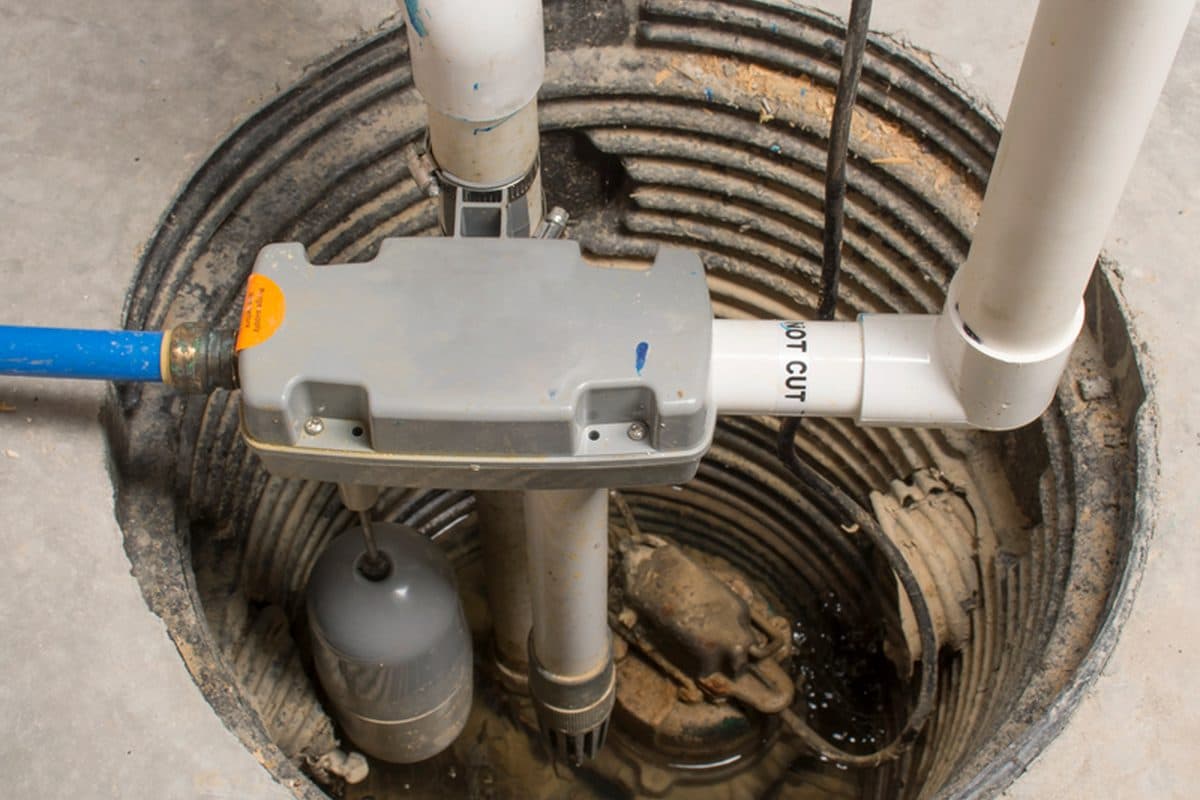
Waiting is the costliest option. Wooley cites a $3,500 spot repair becoming a $12,000 bursting job within three to five years as a line deteriorates, and a sewage backup adds $5,000 to $50,000 in remediation on top of the pipe work. Standard homeowners insurance does not cover the line itself, though a service-line endorsement rider is worth checking before you need it. If the camera shows systemic failure, replacing now is almost always cheaper than replacing later. If backups are the recurring symptom rather than a failed line, our sump pump installation cost guide prices the pump that keeps a basement from flooding.
Sources: Plumbing Price Guide: Sewer Line Replacement Cost 2026: Prices by Method and Length (Plumbing Price Guide), Wooley Trenchless: Sewer Line Repair Cost Guide (Wooley Trenchless), Michael & Son: How Much Does It Cost to Replace a Sewer Line (Michael & Son)
Sources
- Wooley Trenchless: Sewer Line Repair Cost Guide (Wooley Trenchless) (accessed 2026-10-13)
- Plumbing Pro San Diego: Trenchless Sewer Repair Cost San Diego 2026 (Plumbing Pro San Diego) (accessed 2026-10-13)
- Michael & Son: How Much Does It Cost to Replace a Sewer Line (Michael & Son) (accessed 2026-10-13)
- Western Rooter: Sewer Line Replacement Cost Estimate 2026 (Western Rooter) (accessed 2026-10-13)
- HomeAdvisor: Sewer Line Replacement Cost (HomeAdvisor) (accessed 2026-10-13)
- Plumbing Price Guide: Sewer Line Replacement Cost 2026: Prices by Method and Length (Plumbing Price Guide) (accessed 2026-10-13)
Frequently asked questions
How much does a plumbing project cost?
Replacing a residential sewer line costs $1,500 to $15,000 in 2026, with most full lateral replacements landing between $3,300 and $8,000. The method matters more than the material: trenchless CIPP lining runs $4,000 to $12,000, pipe bursting $4,000 to $15,000, and open-trench digging $3,000 to $20,000, all before surface restoration that contractors warn often doubles the final bill.
Why is there a cost range instead of a single price?
Project costs move with scope, finish level, and local labor rates. This guide splits the national planning range into low, typical, and high levels, and the scope sections explain what pushes a project toward each end. Use the range to budget, then collect itemized contractor quotes for your exact project.
Are these figures contractor quotes?
No. They are national planning ranges compiled from published, cited sources, shown with their assumptions and limitations. Treat them as a budgeting starting point, not a bid. Our methodology page explains how every figure is sourced and reviewed.