Household Decors
Verified planning tool

Tank vs Tankless Water Heater: 20-Year Cost Calculator

Compare total ownership cost, not just the install quote. Energy, yearly descaling, and the storage-tank replacement you will buy around year 12 are all in the math.

Reviewed dataset Every figure traceable to sources
Reviewed national planning data

Tank vs tankless: 20-year cost calculator

The install quote is only the first check you write. This compares total ownership cost: installation, yearly energy, maintenance, and the storage-tank replacement you will buy around year 12.

Planning ranges are not guaranteed quotes. Local labor and material conditions vary, and your install scenario moves the price more than any other factor.

What to do with your estimate

Your result above is a national planning range, not a quote. Two ways to put it to work:

Print or save this estimate

Keep a copy on hand to compare against contractor quotes line by line. Your browser can also save it as a PDF.

Build your project budget

Plug rates from your own quotes into the project budget worksheet and see the line-item total.

Open the worksheet

Related cost guides

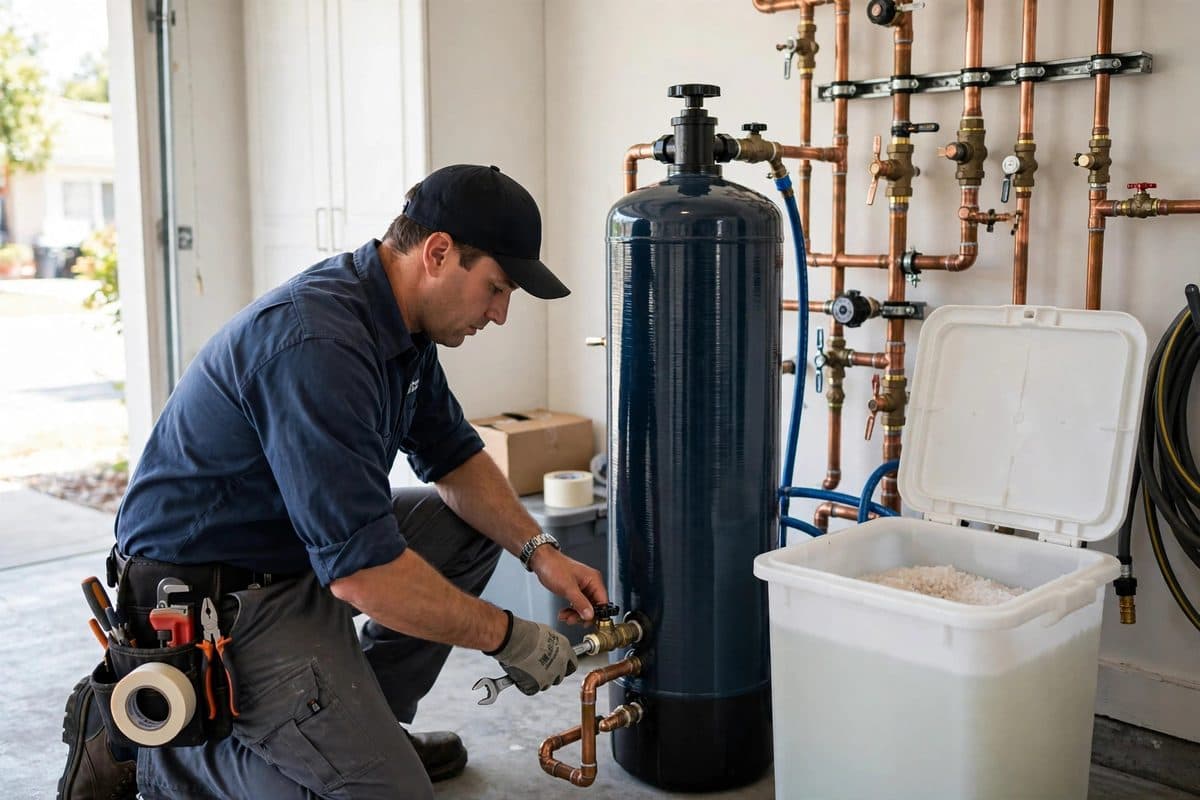
Professional plumber installing a tall water softener tank with salt brine tank and copper pipes in a residential garage
Water Softener Installation Cost in 2026: What You Will PayWater softener installation costs $1,500 on average in 2026, typically $800 to $3,000 for a salt-based system. See salt-based vs salt-free pricing, the sizing formula pros use, and why the same unit costs $1,152 via an installer or $6,500 via a dealer channel.Read guide
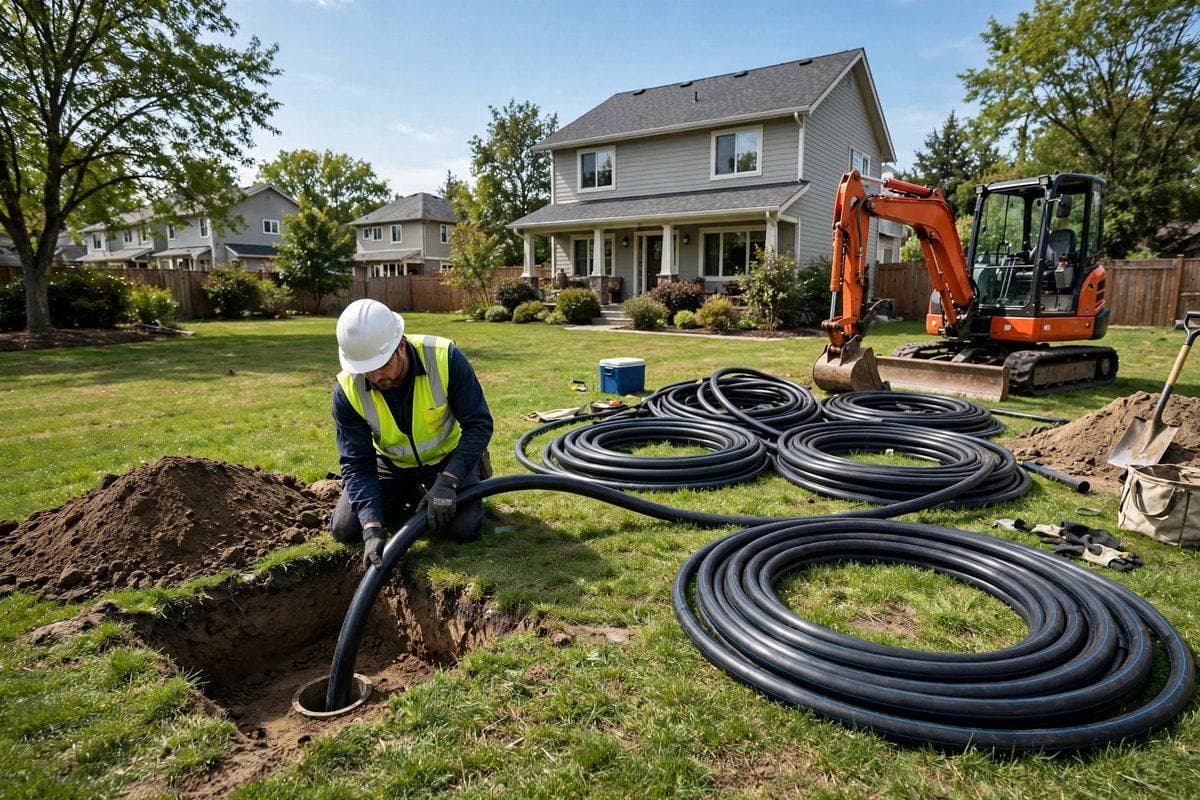
Trenchless sewer line replacement in progress with a technician feeding new HDPE pipe through an access pit in a suburban backyard
How Much Does It Cost to Replace a Sewer Line in 2026?Sewer line replacement costs $5,000 on national typical in 2026, with most full lateral replacements landing between $3,300 and $8,000 and the full project band running $1,500 to $15,000. Trenchless CIPP lining runs $4,000 to $12,000 and pipe bursting $4,000 to $15,000, while open-trench digging costs $3,000 to $20,000 before surface restoration that often doubles the final bill.Read guide
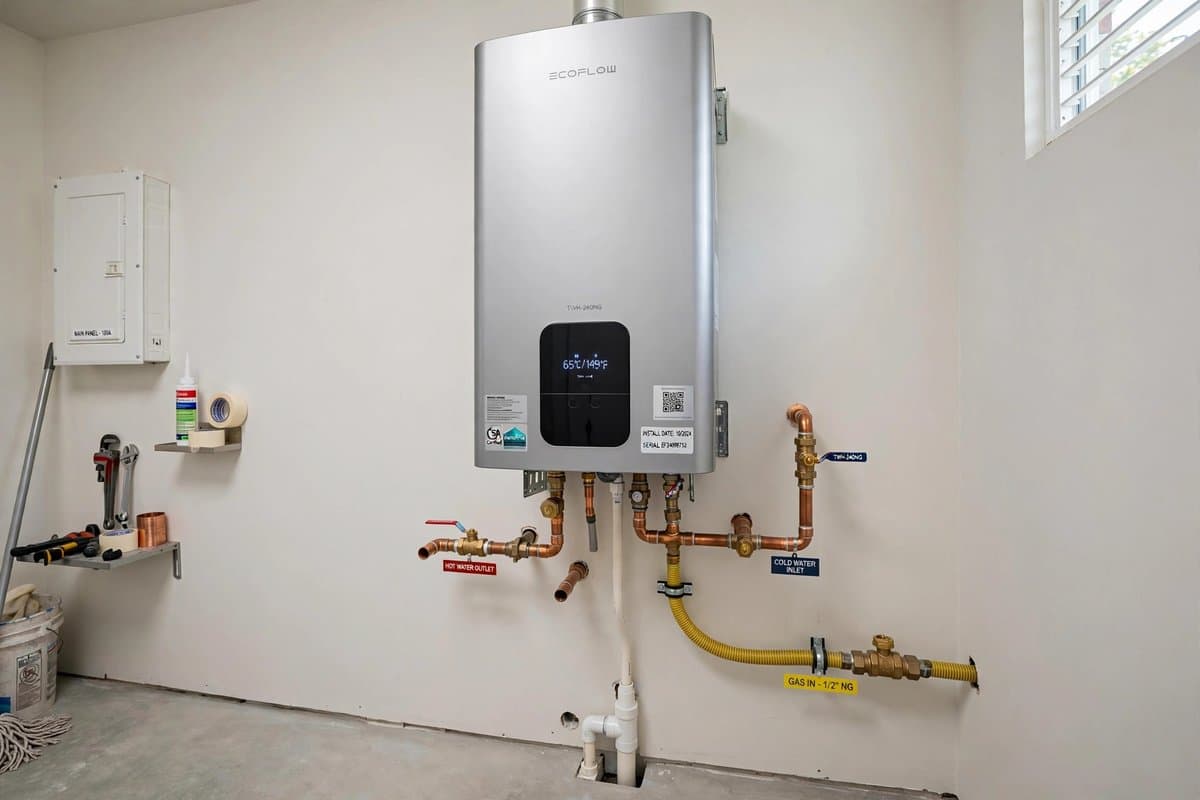
New wall-mounted tankless water heater with copper piping and gas line in a clean utility room
Tankless Water Heater Installation Cost in 2026: Prices by Fuel Type and ScenarioTankless water heater installation costs $2,800 on national average, typically $1,400 to $5,600 for a whole-house unit plus professional installation. Gas models cost more to install than electric; the gas line upsizing and new venting are what most quotes hide.Read guide
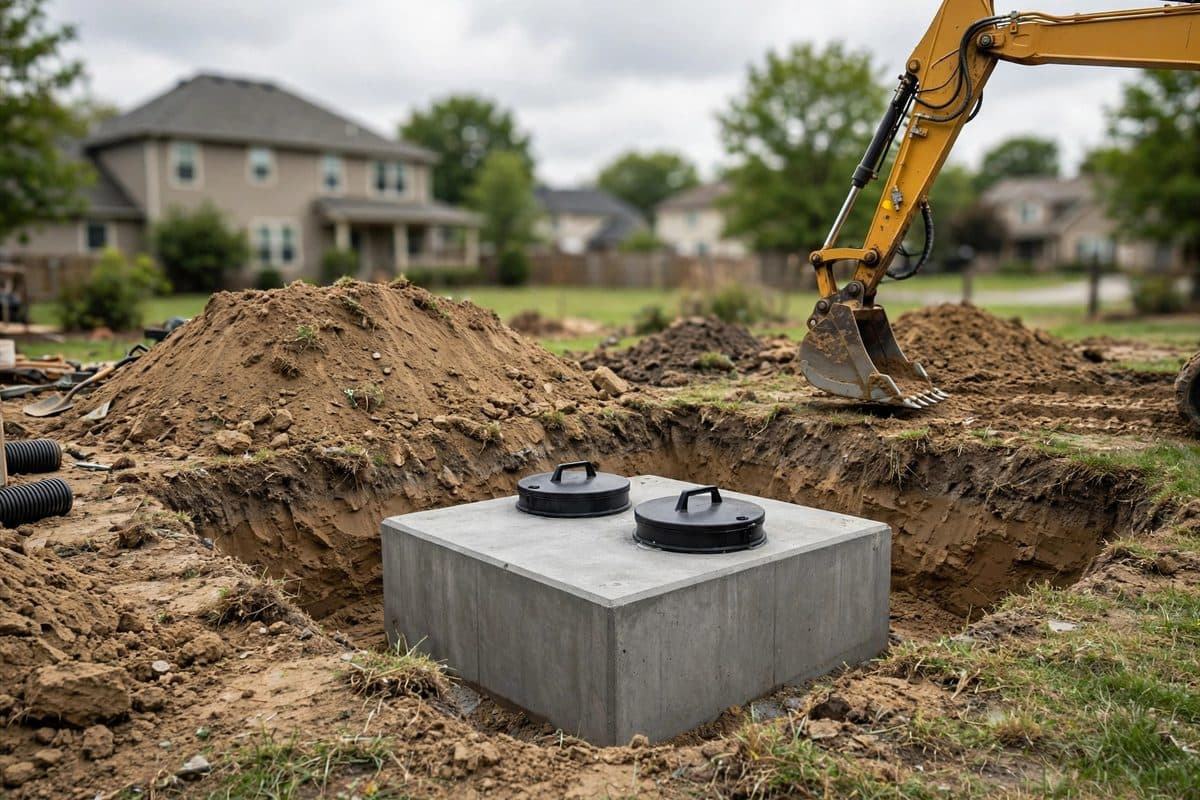
New concrete septic tank being set into an excavated pit by an excavator in a residential backyard
Septic Tank Installation Cost in 2026: What You'll PaySeptic system installation costs about $10,000 on national average, with most projects landing between $6,800 and $15,000. Conventional gravity systems run $4,000 to $10,000 installed; engineered systems average about $15,000 and reach $25,000 with difficult site prep.Read guide
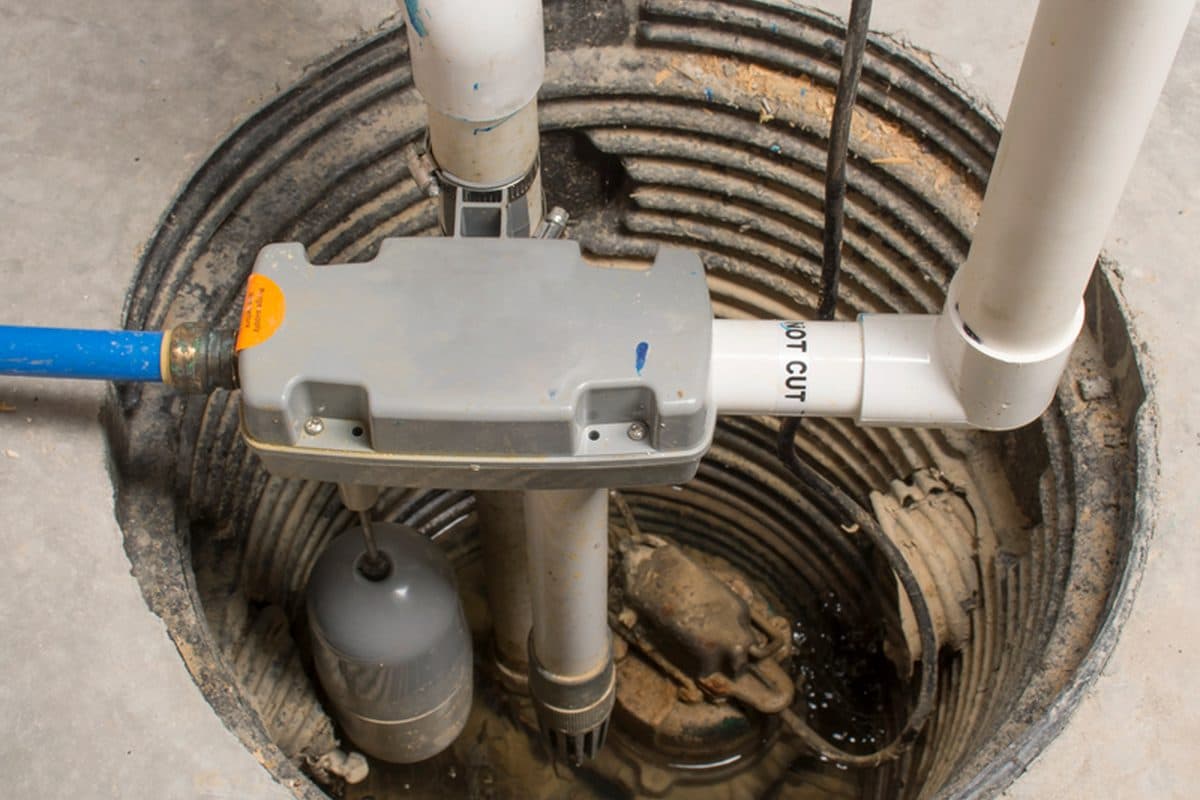
Sump pump installed in a basement pit with discharge pipe
How Much Does Sump Pump Installation Cost in 2026?Sump pump installation costs $1,200 on national average in 2026, with most projects between $800 and $1,500. A simple pump replacement in an existing pit runs $400 to $700; a brand-new system costs $7,000 to $12,000. Compare pump types, sizes by horsepower, and battery backup add-ons.Read guide
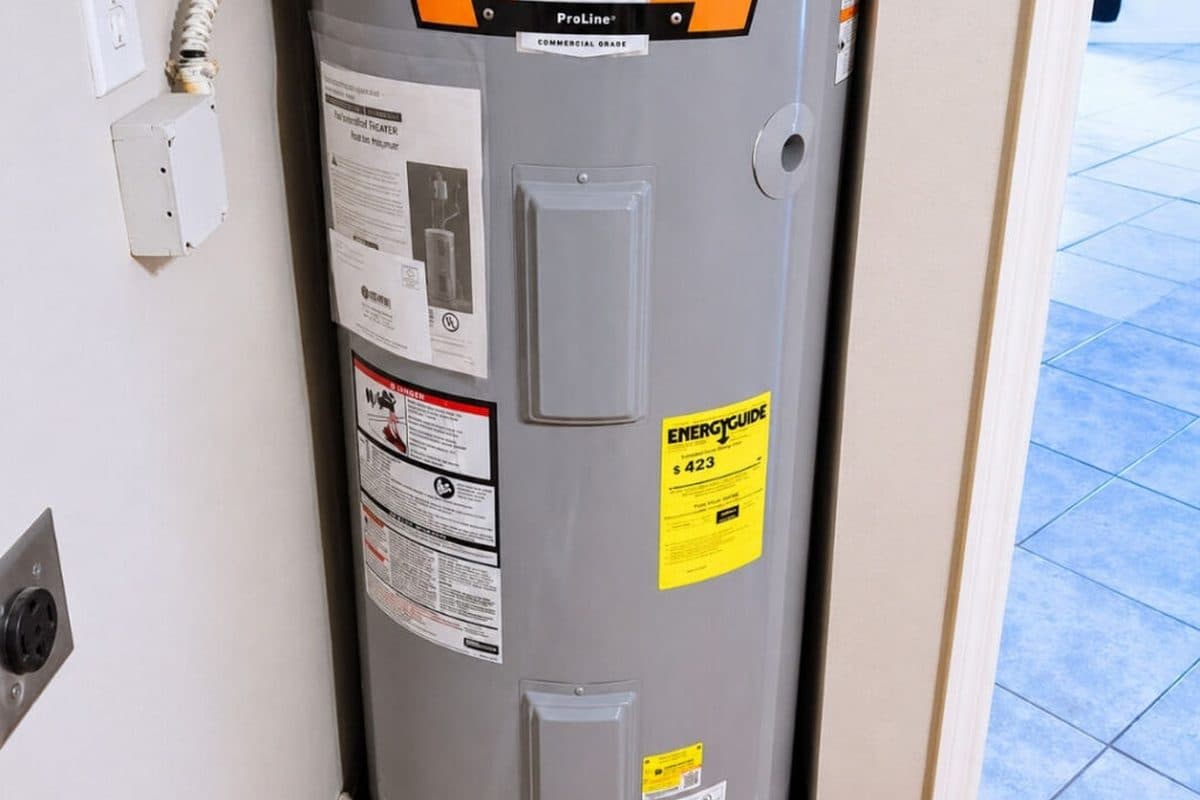
New tank water heater installed in a utility closet with copper piping
How Much Does It Cost to Install a Water Heater in 2026?How much does water heater installation cost? $600 to $3,100 for a standard tank, $1,400 to $5,600 for tankless in 2026. Gas-to-tankless conversions top the range; the 20-year math is what decides tank vs tankless.Read guide

Common questions

How much does a tankless water heater save over 20 years?

It depends on fuel, usage, and your install scenario. For a typical gas home with medium hot water use, tankless saves roughly $400 to $1,700 over 20 years, mostly by using 25% less gas and avoiding a second tank purchase around year 12. Electric tankless rarely wins on cost alone because electric tanks are already efficient.

When does a tankless water heater break even?

In the model's typical gas scenarios, break-even lands around year 11 to 13, driven by the avoided tank replacement rather than energy savings alone. Simple energy-only payback looks shorter (8 to 10 years), but that math leaves out the $100 to $250 yearly descaling a tankless unit needs.

Does a tankless water heater really lower energy bills?

Yes, but modestly. DOE data shows 24 to 34% better efficiency at low to medium hot water use, which ENERGY STAR translates to about $95 a year for a family of four on gas. At high simultaneous demand the advantage shrinks to 8 to 14%.

What maintenance does a tankless water heater need?

Annual descaling to prevent mineral buildup, typically $100 to $250 per professional service. Skip it and efficiency drops, error codes appear, and the 20-year lifespan shortens. A storage tank needs far less: periodic flushing and an anode rod every few years.

When is a regular tank water heater the better choice?

When you plan to sell within about 10 years, when the conversion quote lands at the top of the range, or when your household barely uses hot water. In those cases the install premium never pays back, and another tank is the rational call.