Attic Insulation Cost in 2026: Price per Sq Ft
Attic insulation costs $2,100 on national average, with most projects between $1,000 and $2,700. Expect $1 to $3 per square foot installed. Blown-in fiberglass or cellulose is cheapest at $0.90 to $2.40 per sq ft; spray foam runs $1 to $4.50.
Planning figures, not contractor quotes. How we calculate
Short answer
Insulating an attic costs $2,100 on national average, with most projects between $1,000 and $2,700. Expect $1 to $3 per square foot installed. Blown-in fiberglass or cellulose is cheapest at $0.90 to $2.40 per sq ft; spray foam runs $1 to $4.50.
Cost summary
Estimates per project. See the cited sources and methodology before using these figures for a decision.
| Cost level | Estimate |
|---|---|
| Low | $500.00 |
| Typical | $2,100.00 |
| High | $6,000.00 |
Calculate your planning range
Enter rates from your own quotes or research. We do not supply unverified local prices.
What you'll actually pay
Insulating an attic costs about $2,100 on national average, and most homeowners land between $1,000 and $2,700 all-in. HomeAdvisor reports a typical range of $1,700 to $2,500 at $1 to $3 per square foot, while HomeGuide puts the national average at $1,800 with an average range of $1,000 to $2,700.
The full spread runs from about $500 for a small top-up job to $6,000 for a large attic with premium materials or old-insulation removal. Bob Vila cites a national average near $2,500 with a typical range of $1,500 to $3,500, which sits comfortably inside the same band.
Per square foot is how contractors actually price it: $1 to $3 installed is the standard planning number. Multiply by your attic's square footage and you have a working estimate before anyone climbs the ladder.
Sources: HomeAdvisor: Attic Insulation Cost Guide (2026), HomeGuide: Attic Insulation Cost (2026)
Cost by insulation type
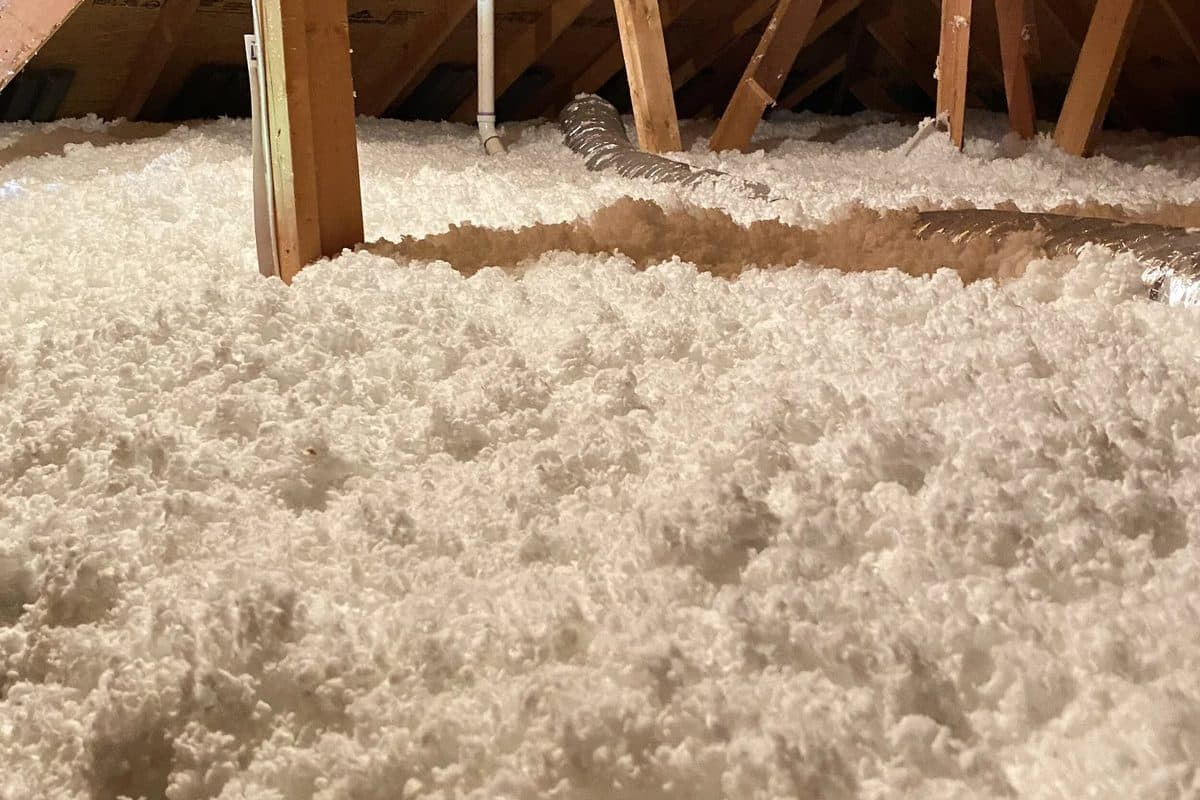
Material choice is the biggest price lever after attic size. Blown-in fiberglass or cellulose is the cheapest professional option at $0.90 to $2.40 per square foot installed, and it is the default recommendation for most attics because it fills gaps around joists and wiring.
Batt and roll insulation runs $0.80 to $2.60 per square foot, and loose-fill lands at $1.00 to $2.50. These are the workhorse options: affordable, fast to install, and easy to top up later.
Spray foam is the premium play at $1.00 to $4.50 per square foot, two to four times the cost of blown-in. It air-seals as it insulates, which is why it wins in hard-to-reach attics, but for a straightforward open attic it is usually more than you need. Reflective barriers ($0.50 to $2.20) and structural panels ($4.00 to $12.00) are niche choices for specific situations. Our spray foam insulation cost guide covers the foam-only numbers in full detail.
Sources: HomeGuide: Attic Insulation Cost (2026), HomeGuide: Blown-In Insulation Cost (2026)
Cost by attic size
At the standard $1 to $3 per square foot, attic size sets the bill almost directly. A small 300 sq ft attic runs $300 to $900; a 500 sq ft attic runs $500 to $1,500; an 800 sq ft attic runs $800 to $2,400.
A 1,000 sq ft attic, roughly the footprint of a typical ranch home, lands at $1,000 to $3,000. Larger 1,500 sq ft attics run $1,500 to $4,500. These are installed prices for standard blown-in or batt at typical R-values.
Measure your attic floor before calling contractors. Quotes given sight-unseen over the phone almost always assume an easy, empty rectangle, and the real attic rarely cooperates.
Cost by R-value
R-value is insulation's effectiveness rating, and higher R-values need more material and more labor hours. For blown-in insulation over 1,000 sq ft, R-30 runs $660 to $1,200, R-38 runs $840 to $1,500, and R-44 runs $990 to $1,700.
Push to R-49 and you are at $1,100 to $1,900; R-60, the top of the residential range, runs $1,400 to $2,400. The DOE recommends R-30 to R-60 depending on your climate zone, so colder regions should budget toward the high end.
Do not pay for R-value you do not need, but do not underbuy either. An under-insulated attic in a cold climate wipes out the savings that justified the project in the first place.
What drives the price up
Attic size is the single biggest driver since nearly everything prices per square foot. After that, target R-value matters most: jumping from R-30 to R-60 roughly doubles the material and adds meaningful labor time.
Old insulation removal is the budget killer people miss. A top-up over existing insulation stays cheap; a full replacement with removal and disposal runs $1,500 to $5,000. If your old insulation is damaged, compressed, or contaminated, get the removal line itemized separately.
Access and air sealing round out the list. Difficult access or low clearance raises labor hours, many contractors carry $1,500 to $2,000 minimum project charges, and air sealing is often bundled as an add-on. It is worth it: sealing gaps before insulating is consistently the highest-ROI line item in the project. Attic ventilation matters as much as insulation; our whole house fan installation cost guide prices the airflow side.
Sources: HomeGuide: Attic Insulation Cost (2026), TopBestGulf: Attic Insulation Cost Analysis (2026)
Which attic insulation quote is yours: three project scenarios that explain the price spread
The budget scenario is the top-up: the existing insulation is still sound, just thin, and the crew blows another layer of fiberglass or cellulose over the top. Blown-in runs $0.90 to $2.40 per square foot installed, and a small 300 sq ft attic lands at $300 to $900; the full national spread starts around $500 for a small top-up job. Most top-ups land inside the national $1,000 to $2,700 band, with HomeGuide putting the national average at $1,800, and contractors price per square foot so a tape-measured attic gives you a working estimate before anyone climbs the ladder. The telltale signs you are quoting this scenario: the attic is easy to access, the old layer is clean and uncompressed, and the quote mentions air sealing, which is consistently the highest-ROI line item in the project.
The middle scenario is the full-attic install at the right R-value: the attic is empty or the old layer is too thin to save, so the crew air-seals first, then fills to the target. Over 1,000 sq ft, R-30 runs $660 to $1,200, R-38 $840 to $1,500, R-49 $1,100 to $1,900, and R-60, the top of the residential range, $1,400 to $2,400; the DOE recommends R-30 to R-60 depending on climate zone, so colder regions budget toward the high end. HomeAdvisor's typical installed range is $1,700 to $2,500 at $1 to $3 per square foot, and the national average sits near $1,800 to $2,100. One planning wrinkle: many contractors carry $1,500 to $2,000 minimum project charges, so small attics never quite follow the per-square-foot math. If the quote lists a removal line item, you are not in this scenario anymore.
The expensive scenario is the remediation job: damaged, compressed, or contaminated insulation changes the project completely. Removal and disposal runs $1,500 to $5,000 before a single batt goes down, and a large attic with premium materials or old-insulation removal reaches $6,000 all-in. Get the removal line itemized separately so you can see what is material and what is labor. The other price escalator is the attic itself: difficult access or low clearance raises labor hours, and attics with complex framing, lots of penetrations, or moisture concerns push toward spray foam at $1.00 to $4.50 per square foot, where the air-sealing earns the premium. Ventilation work often rides along with remediation, which is why air-sealing and airflow quotes tend to show up together.
Sources: HomeGuide: Blown-In Insulation Cost (2026), TopBestGulf: Attic Insulation Cost Analysis (2026), HomeAdvisor: Attic Insulation Cost Guide (2026), HomeGuide: Attic Insulation Cost (2026)
Blown-in vs spray foam: which is worth it?
For most attics, blown-in wins on value. At $0.90 to $2.40 per square foot installed ($900 to $3,600 total), it delivers the R-value you need at the lowest professional price, and topping it up in ten years is cheap and easy.
Spray foam at $1.00 to $4.50 per square foot earns its premium in specific cases: attics with complex framing, lots of penetrations, or moisture concerns where its air-sealing matters. In a simple open attic, you are paying double for benefits you will barely notice.
The practical rule: get blown-in unless a contractor can show you a specific reason your attic needs foam. And whatever you choose, air-seal first. Insulation slows heat; air sealing stops it, and the combination is what actually cuts the bill.
Sources: HomeGuide: Attic Insulation Cost (2026), HomeGuide: Blown-In Insulation Cost (2026)
Sources
- HomeGuide: Blown-In Insulation Cost (2026) (accessed 2026-10-10)
- TopBestGulf: Attic Insulation Cost Analysis (2026) (accessed 2026-10-10)
- HomeAdvisor: Attic Insulation Cost Guide (2026) (accessed 2026-10-10)
- HomeGuide: Attic Insulation Cost (2026) (accessed 2026-10-10)
Frequently asked questions
How much does an insulation project cost?
Insulating an attic costs $2,100 on national average, with most projects between $1,000 and $2,700. Expect $1 to $3 per square foot installed. Blown-in fiberglass or cellulose is cheapest at $0.90 to $2.40 per sq ft; spray foam runs $1 to $4.50.
Why is there a cost range instead of a single price?
Project costs move with scope, finish level, and local labor rates. This guide splits the national planning range into low, typical, and high levels, and the scope sections explain what pushes a project toward each end. Use the range to budget, then collect itemized contractor quotes for your exact project.
Are these figures contractor quotes?
No. They are national planning ranges compiled from published, cited sources, shown with their assumptions and limitations. Treat them as a budgeting starting point, not a bid. Our methodology page explains how every figure is sourced and reviewed.