Spray Foam Insulation Cost in 2026: What You Will Pay
Spray foam insulation costs $2,888 on average in 2026, $0.60 to $3.10 per board foot installed. Open-cell runs $0.60 to $1.60, closed-cell $1.30 to $3.10. See why quotes vary 3x, when DIY kits pay off, and the real payback by climate.
Planning figures, not contractor quotes. How we calculate
Short answer
Spray foam insulation costs $2,888 on national average in 2026 (Angi, 4,048 verified projects), with most projects landing between $1,455 and $4,337. Contractors price it per board foot: open-cell $0.60 to $1.60 installed, closed-cell $1.30 to $3.10. Thickness is the hidden multiplier, and old insulation removal, vapor barriers, and contractor minimums explain most quote gaps.
Cost summary
Estimates per project. See the cited sources and methodology before using these figures for a decision.
| Cost level | Estimate |
|---|---|
| Low | $1,000.00 |
| Typical | $2,888.00 |
| High | $9,000.00 |
Calculate your planning range
Enter rates from your own quotes or research. We do not supply unverified local prices.
How Much Does Spray Foam Insulation Cost?
Spray foam insulation costs $2,888 on a national average in 2026 for a typical residential install, based on 4,048 verified projects reported by Angi in September 2026. Most homeowners pay between $1,455 and $4,337 for a standard project, though the total swings widely with foam type, thickness, and where it is applied.
Contractors price spray foam by the board foot, which is one square foot of coverage at one inch of thickness. Installed prices run $0.60 to $3.10 per board foot nationally: open-cell foam costs $0.60 to $1.60 per board foot installed, while closed-cell foam runs $1.30 to $3.10 per board foot installed (Angi 2026). A manufacturer cost guide from ArmorThane (2026) reports somewhat lower bands, $0.44 to $0.73 for open-cell and $1.00 to $2.12 for closed-cell, which shows why quotes look contradictory until you compare the same foam type, thickness, and labor market.
Project totals scale with size and placement. Angi reports small jobs starting around $675, attic projects from $1,100 to $9,000, and whole-home installs from $4,000 to $29,000. Kraken Bond (2026) puts a 1,000 square foot attic at $3,000 to $10,000, and AllBetter (2026) reports whole-home projects from $3,000 to $10,000. Our headline planning band for a typical residential spray foam install is $1,000 to $9,000, with $2,888 as the national typical figure.
Sources: Angi: Spray Foam Insulation Cost in 2026 (Angi, 4,048 verified projects), ArmorThane: Attic Insulation Cost 2026: Blown-In vs Spray Foam (ArmorThane), Kraken Bond: Spray Foam Attic Insulation: Cost and Payback (Kraken Bond, 2026), AllBetter: Home Insulation Cost 2026: Prices by Type (AllBetter)
Why Quotes Vary So Much: Board Feet, Thickness, and Hidden Line Items
A board foot is the unit that makes spray foam quotes comparable, and thickness is the hidden multiplier most quotes do not explain. One board foot equals one square foot of coverage at one inch thick, so a 1,000 square foot attic sprayed four inches deep is 4,000 board feet. That is why a $0.60 per board foot open-cell quote is not automatically cheaper than a $1.30 per board foot closed-cell quote: open-cell delivers R-3.5 to R-3.7 per inch, so it needs roughly twice the depth of closed-cell (R-6 to R-6.5 per inch) to reach the same insulation value (Angi, ArmorThane 2026).
Location and home age move the price per square foot before foam type even enters the picture. Angi (2026) reports new construction at $1 to $4 per square foot versus $3 to $5 per square foot for existing homes, because crews must open walls and work around what is already there. Walls, attics, crawlspaces, basements, rim joists, and roof decks each price differently, and tight attics can carry a 20 to 40 percent labor premium (GreenBudgetHub 2026).
Three hidden line items explain most of the gap between a low quote and a high one. Removing old insulation runs $1 to $2 per square foot (HomeGuide, Nov 2025), and spray foam jobs commonly require it. Open-cell foam usually needs a separate vapor barrier at $0.65 to $1 per square foot, a cost closed-cell avoids (Angi 2026). If the old insulation shows mold, remediation adds $1,125 to $3,345, and junk removal adds about $240 (Angi 2026). Add contractor minimums of $500 to $750 (GreenBudgetHub 2026), and a small job can cost more per board foot than a whole attic. Ask every bidder to itemize these separately, or the cheapest headline quote often becomes the most expensive invoice. If the quote includes a full insulation replacement rather than just foam, our attic insulation installation cost guide has the fiberglass and cellulose numbers.
Sources: Angi: Spray Foam Insulation Cost in 2026 (Angi, 4,048 verified projects), ArmorThane: Attic Insulation Cost 2026: Blown-In vs Spray Foam (ArmorThane), HomeGuide: How Much Does a DIY Spray Foam Insulation Kit Cost? (HomeGuide, Nov 2025), GreenBudgetHub: Spray Foam Insulation Cost 2026 (GreenBudgetHub)
Open-Cell vs Closed-Cell Spray Foam: Cost and Performance
Open-cell spray foam is the budget option: $0.60 to $1.60 per board foot installed nationally (Angi 2026), or $1.00 to $2.00 per square foot (AllBetter 2026). It delivers R-3.5 to R-3.7 per inch, dampens sound well, and lasts 50 to 80 years (Kraken Bond 2026). It is permeable to moisture, so it does not belong in crawlspaces or other damp locations, and in most climates it needs a separate vapor barrier (AllBetter, GreenBudgetHub 2026).
Closed-cell spray foam costs roughly twice as much per board foot, $1.30 to $3.10 installed (Angi 2026), or $2.00 to $3.50 per square foot (AllBetter 2026), but it packs R-6 to R-6.5 per inch, so it needs about half the depth for the same R-value. At two inches or more it acts as its own vapor barrier, adds structural rigidity, and lasts 80 years or more, effectively the life of the structure (Kraken Bond, GreenBudgetHub 2026). It fits basements, crawlspaces, exterior walls, and humid climates where open-cell cannot go.
The rule of thumb: choose open-cell for dry interior walls and sound dampening where depth is cheap, and closed-cell where moisture control, tight space, or structural stiffness matters. When comparing quotes across foam types, always convert to cost per installed R-value for the target depth, not cost per board foot, or the comparison will mislead you (Angi, ArmorThane 2026).
Sources: Angi: Spray Foam Insulation Cost in 2026 (Angi, 4,048 verified projects), AllBetter: Home Insulation Cost 2026: Prices by Type (AllBetter), Kraken Bond: Spray Foam Attic Insulation: Cost and Payback (Kraken Bond, 2026), GreenBudgetHub: Spray Foam Insulation Cost 2026 (GreenBudgetHub)
Your project scenario sets the price more than the foam brand you pick
Three scenarios cover nearly every spray foam job, and identifying yours explains the quote spread more than any other single question. The budget scenario is an attic-only install with open-cell foam, the classic air-sealing upgrade: Angi (2026) reports small jobs starting around $675 and attic projects from $1,100 to $9,000, while Kraken Bond (2026) puts a 1,000 square foot attic at $3,000 to $10,000. Open-cell runs $0.60 to $1.60 per board foot installed nationally, delivers R-3.5 to R-3.7 per inch, and usually needs a separate vapor barrier at $0.65 to $1 per square foot, which closed-cell avoids. In dry attics with room for four or more inches of depth, this scenario wins on payback too, typically five to ten years.
The middle scenario is the whole-home envelope in closed-cell foam, the performance play. Angi (2026) reports whole-home installs from $4,000 to $29,000, with AllBetter (2026) seeing $3,000 to $10,000 for typical whole-home projects. Closed-cell costs roughly twice as much per board foot, $1.30 to $3.10 installed, but it packs R-6 to R-6.5 per inch, acts as its own vapor barrier at two inches or more, adds structural rigidity, and lasts 80 years or longer. Expect new construction to price near $1 to $4 per square foot versus $3 to $5 per square foot for existing homes, because crews work around what is already there. In a cold climate, a closed-cell unvented attic pays back in six to twelve years through heating savings.
The expensive scenario is the existing-home retrofit that starts with cleanup. Tight attics can carry a 20 to 40 percent labor premium, and removing old insulation runs $1 to $2 per square foot before any foam goes in. If the old insulation shows mold, remediation adds $1,125 to $3,345 plus about $240 for junk removal, and those line items belong in the quote, not discovered mid-job. Damp locations force the foam choice for you: open-cell does not belong in crawlspaces, so closed-cell is the only option there. A whole attic typically needs 2,000 or more board feet, which is also the point where the per-board-foot math stops favoring small partial jobs, so get the full envelope quoted in one pass.
Sources: Angi: Spray Foam Insulation Cost in 2026 (Angi, 4,048 verified projects), HomeGuide: How Much Does a DIY Spray Foam Insulation Kit Cost? (HomeGuide, Nov 2025), AllBetter: Home Insulation Cost 2026: Prices by Type (AllBetter), GreenBudgetHub: Spray Foam Insulation Cost 2026 (GreenBudgetHub), ArmorThane: Attic Insulation Cost 2026: Blown-In vs Spray Foam (ArmorThane), Kraken Bond: Spray Foam Attic Insulation: Cost and Payback (Kraken Bond, 2026)
DIY Kits vs Professional Installation
DIY spray foam kits cost $300 to $850 and cover 200 to 600 board feet, which works out to $0.80 to $1.80 per board foot (HomeGuide, Nov 2025). Major kit brands include Dow Froth-Pak, Tiger Foam, Touch 'n Foam, Handi-Foam, and Foam It Green. Angi (2026) reports a similar kit band of $350 to $800 for 200 to 600 square feet of coverage, noting that most jobs need two to three kits.
DIY math works for small, defined jobs and falls apart for whole rooms. Sealing rim joists or gaps around pipes with a $50 to $100 kit can pay back in two to three years, and DIY saves 50 to 70 percent on small jobs (GreenBudgetHub 2026). A whole attic typically needs 2,000 or more board feet, at which point DIY often costs as much as hiring a professional once you buy enough kits (GreenBudgetHub, HomeGuide).
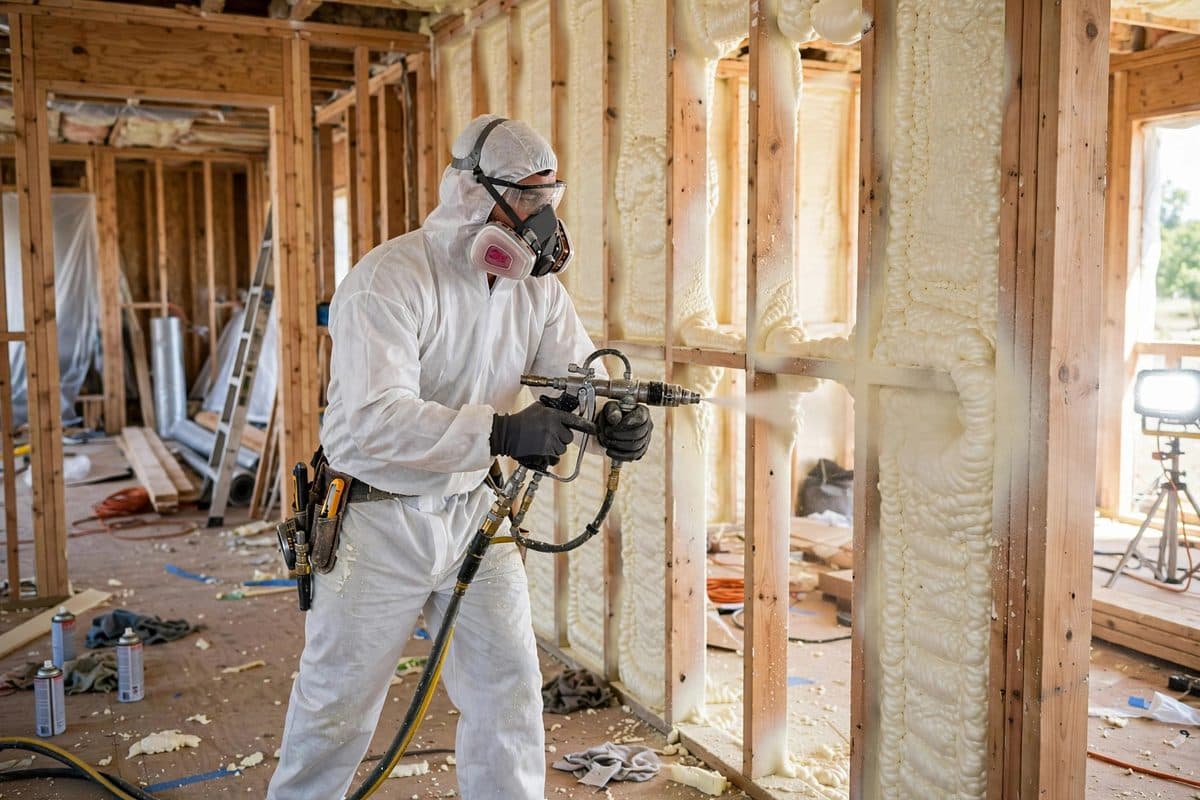
Professionals bring correct mix ratios, code compliance, safety handling, and a warranty. Incorrect mixing causes off-gassing and failed R-values, and occupants must vacate until the foam cures (Angi, HomeGuide 2026). Many jurisdictions also require a thermal barrier over the foam, which is a separate installed cost. Hire a pro for attics, walls, and anything over a few hundred board feet; reserve kits for rim joists and spot air-sealing.
Sources: HomeGuide: How Much Does a DIY Spray Foam Insulation Kit Cost? (HomeGuide, Nov 2025), Angi: Spray Foam Insulation Cost in 2026 (Angi, 4,048 verified projects), GreenBudgetHub: Spray Foam Insulation Cost 2026 (GreenBudgetHub)
Energy Savings and Payback: Is Spray Foam Worth It?
The U.S. Department of Energy finds that proper insulation cuts heating and cooling costs by 15 to 40 percent (cited by AllBetter 2026), and Kraken Bond (2026) reports 15 to 50 percent energy savings for spray foam, noting that much of the gain comes from air sealing rather than R-value alone. Oak Ridge National Laboratory research cited by Kraken Bond found air-sealed assemblies outperforming their rated R-value by up to 40 percent. Pairing insulation with ventilation multiplies the savings; our whole house fan installation cost guide prices the attic-exhaust side.
Payback depends on climate and application. Rim joist sealing pays back in one to two years. A closed-cell unvented attic in a cold climate pays back in six to twelve years, open-cell in five to ten years, and a full project in three to ten years (Kraken Bond 2026). In mild climates, payback stretches to 17 to 35 years, which is where spray foam is usually not worth the premium.
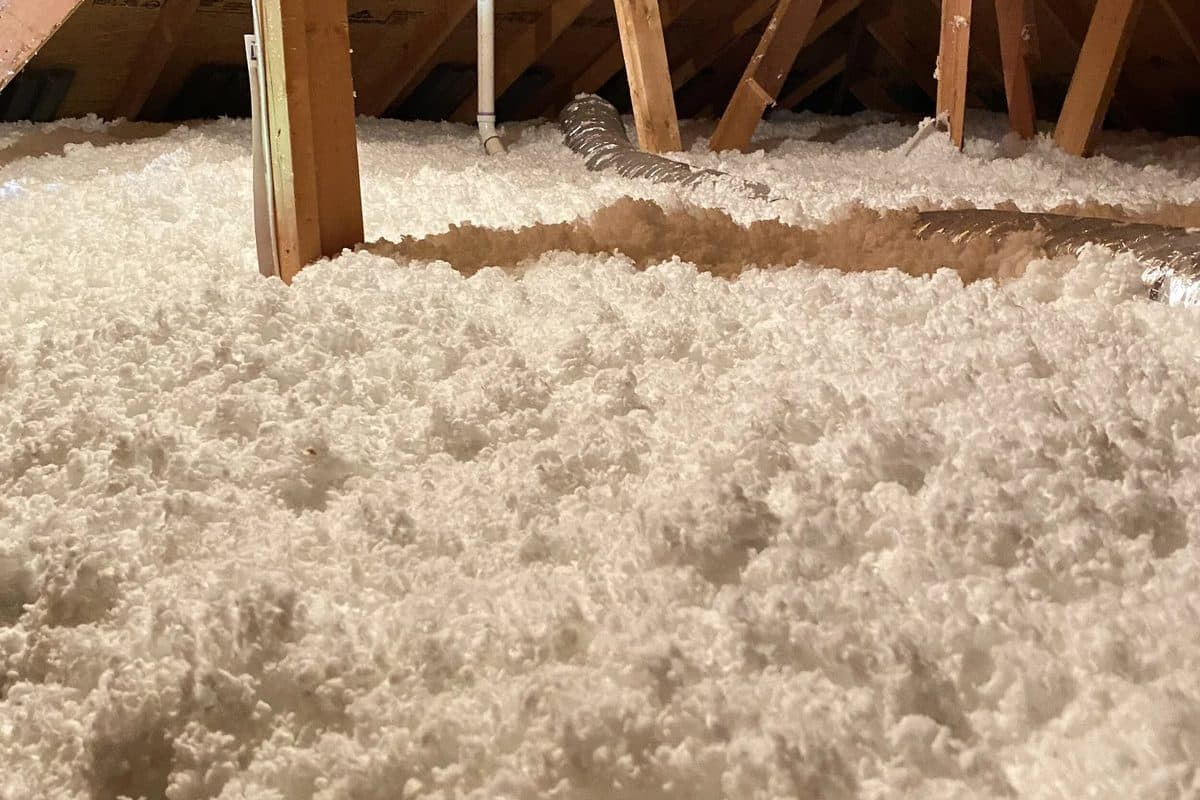
Two reality checks keep the math honest. Per unit of R-value, open-cell foam costs about five times and closed-cell about eight times what blown-in fiberglass costs, so foam earns its price only where air sealing and moisture control matter (ArmorThane 2026). The 25C energy tax credit offered 30 percent up to $1,200 per year for insulation on improvements completed through December 31, 2025, with income-qualified rebates of $2,000 to $4,000 under the HOMES program (AllBetter 2026); confirm current rules with a tax professional before counting on them, since incentive law changes year to year.
Sources: Kraken Bond: Spray Foam Attic Insulation: Cost and Payback (Kraken Bond, 2026), AllBetter: Home Insulation Cost 2026: Prices by Type (AllBetter), ArmorThane: Attic Insulation Cost 2026: Blown-In vs Spray Foam (ArmorThane), GreenBudgetHub: Spray Foam Insulation Cost 2026 (GreenBudgetHub)
Spray Foam Insulation Cost FAQs
How much does spray foam insulation cost per square foot in 2026? Per-board-foot pricing is the honest unit: $0.60 to $3.10 installed nationally (Angi 2026). Per square foot of wall or attic, open-cell runs $1.00 to $2.00 and closed-cell $2.00 to $3.50 (AllBetter 2026), but the total depends on thickness, so always ask how many inches the quote includes.
Should I choose open-cell or closed-cell foam? Choose open-cell for dry interiors and sound dampening at the lower price, and closed-cell for basements, crawlspaces, exterior walls, and humid climates where moisture control and rigidity matter (AllBetter, GreenBudgetHub 2026).
Can I install spray foam insulation myself? Small jobs like rim joists, yes, with kits at $300 to $850 per 200 to 600 board feet (HomeGuide, Nov 2025). Whole attics and walls are professional work because of mix-ratio sensitivity, off-gassing, and code requirements for thermal barriers (Angi, HomeGuide 2026).
How long does spray foam insulation last? Open-cell lasts 50 to 80 years, and closed-cell lasts 80 years or more, effectively the life of the structure (Kraken Bond, GreenBudgetHub 2026).
Is spray foam worth it compared to fiberglass? It costs five to eight times more per R-value point than blown-in (ArmorThane 2026), so it wins where air sealing and moisture control justify the premium, and loses as a pure R-value purchase.
Why do spray foam quotes differ by 3x for the same house? Foam type, thickness, location, new build versus existing, plus hidden line items: old insulation removal ($1 to $2 per square foot), vapor barrier for open-cell ($0.65 to $1 per square foot), mold remediation ($1,125 to $3,345), and contractor minimums ($500 to $750) (Angi, HomeGuide, GreenBudgetHub 2026).
Sources: Angi: Spray Foam Insulation Cost in 2026 (Angi, 4,048 verified projects), AllBetter: Home Insulation Cost 2026: Prices by Type (AllBetter), HomeGuide: How Much Does a DIY Spray Foam Insulation Kit Cost? (HomeGuide, Nov 2025), Kraken Bond: Spray Foam Attic Insulation: Cost and Payback (Kraken Bond, 2026), ArmorThane: Attic Insulation Cost 2026: Blown-In vs Spray Foam (ArmorThane), GreenBudgetHub: Spray Foam Insulation Cost 2026 (GreenBudgetHub)
Sources
- GreenBudgetHub: Spray Foam Insulation Cost 2026 (GreenBudgetHub) (accessed 2026-10-13)
- ArmorThane: Attic Insulation Cost 2026: Blown-In vs Spray Foam (ArmorThane) (accessed 2026-10-13)
- Angi: Spray Foam Insulation Cost in 2026 (Angi, 4,048 verified projects) (accessed 2026-10-13)
- HomeGuide: How Much Does a DIY Spray Foam Insulation Kit Cost? (HomeGuide, Nov 2025) (accessed 2026-10-13)
- Kraken Bond: Spray Foam Attic Insulation: Cost and Payback (Kraken Bond, 2026) (accessed 2026-10-13)
- AllBetter: Home Insulation Cost 2026: Prices by Type (AllBetter) (accessed 2026-10-13)
Frequently asked questions
How much does an insulation project cost?
Spray foam insulation costs $2,888 on national average in 2026 (Angi, 4,048 verified projects), with most projects landing between $1,455 and $4,337. Contractors price it per board foot: open-cell $0.60 to $1.60 installed, closed-cell $1.30 to $3.10. Thickness is the hidden multiplier, and old insulation removal, vapor barriers, and contractor minimums explain most quote gaps.
Why is there a cost range instead of a single price?
Project costs move with scope, finish level, and local labor rates. This guide splits the national planning range into low, typical, and high levels, and the scope sections explain what pushes a project toward each end. Use the range to budget, then collect itemized contractor quotes for your exact project.
Are these figures contractor quotes?
No. They are national planning ranges compiled from published, cited sources, shown with their assumptions and limitations. Treat them as a budgeting starting point, not a bid. Our methodology page explains how every figure is sourced and reviewed.